What is an extruder?
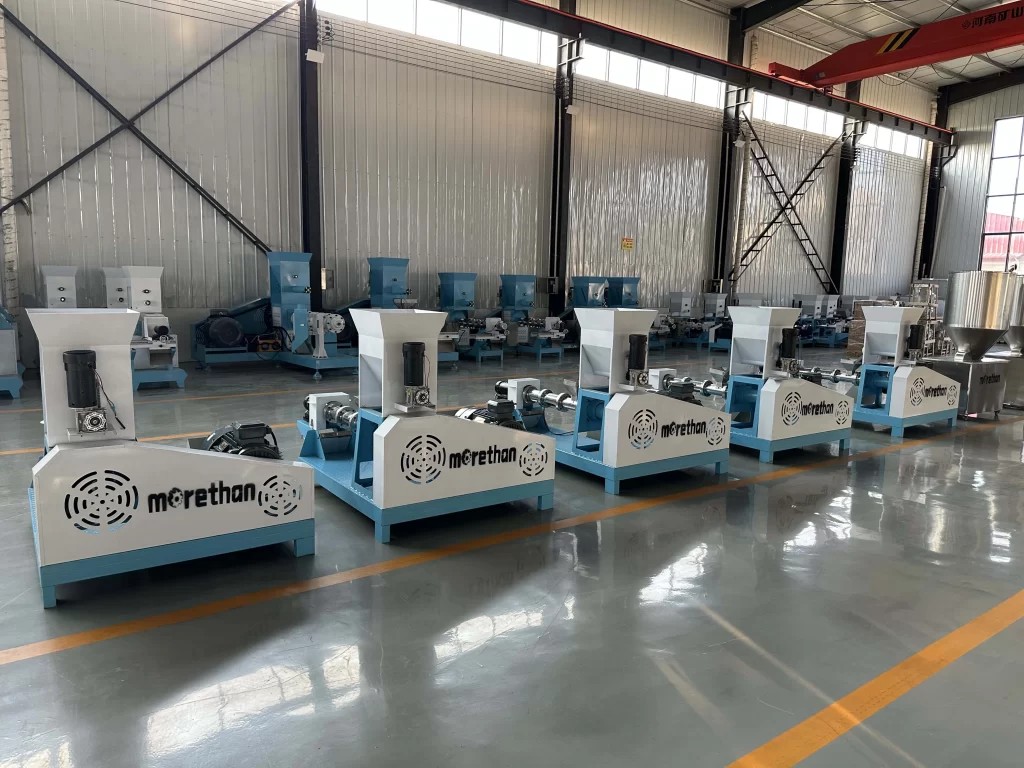
Extruded feed is a kind of fluffy and porous pellets made by feeding raw materials into an extruder, continuously mixing, conditioning (wet process), heating, pressurizing, extruding die holes, suddenly reducing pressure, and cutting into pellets.
It uses high temperature, high pressure, and instantaneous expansion.
Compared with traditional pellet feed, advantages: feed maturity is improved,
feed conversion rate and animal digestion and absorption rate are improved;
The feed is treated with high temperature, which is more hygienic, safer, and can effectively promote animal growth.
What products can the extruder produce?
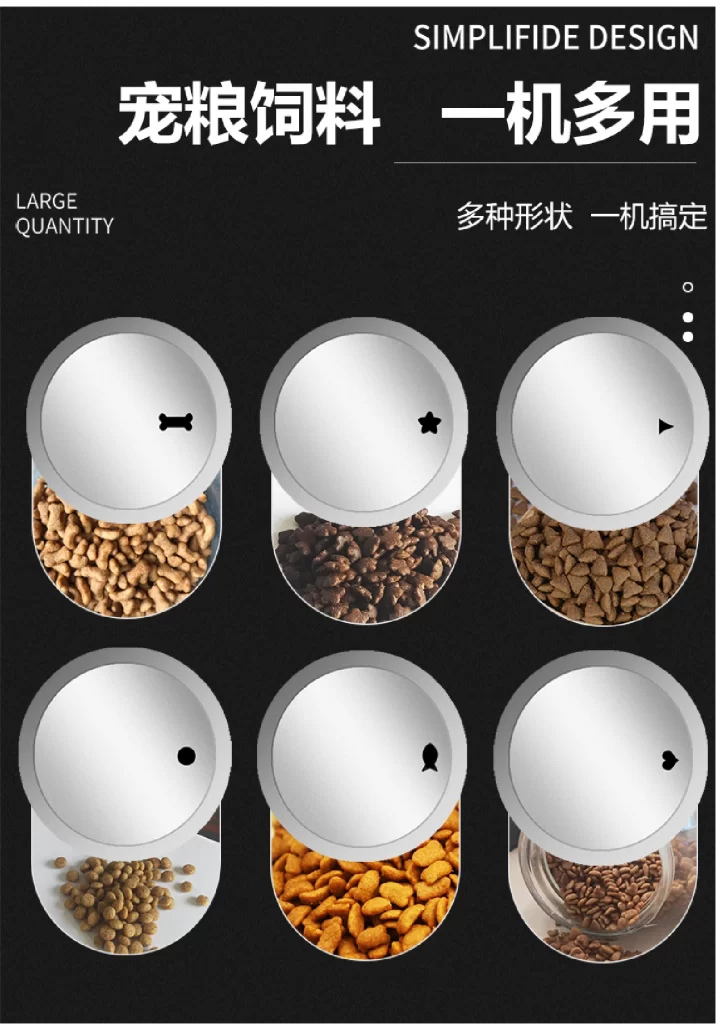
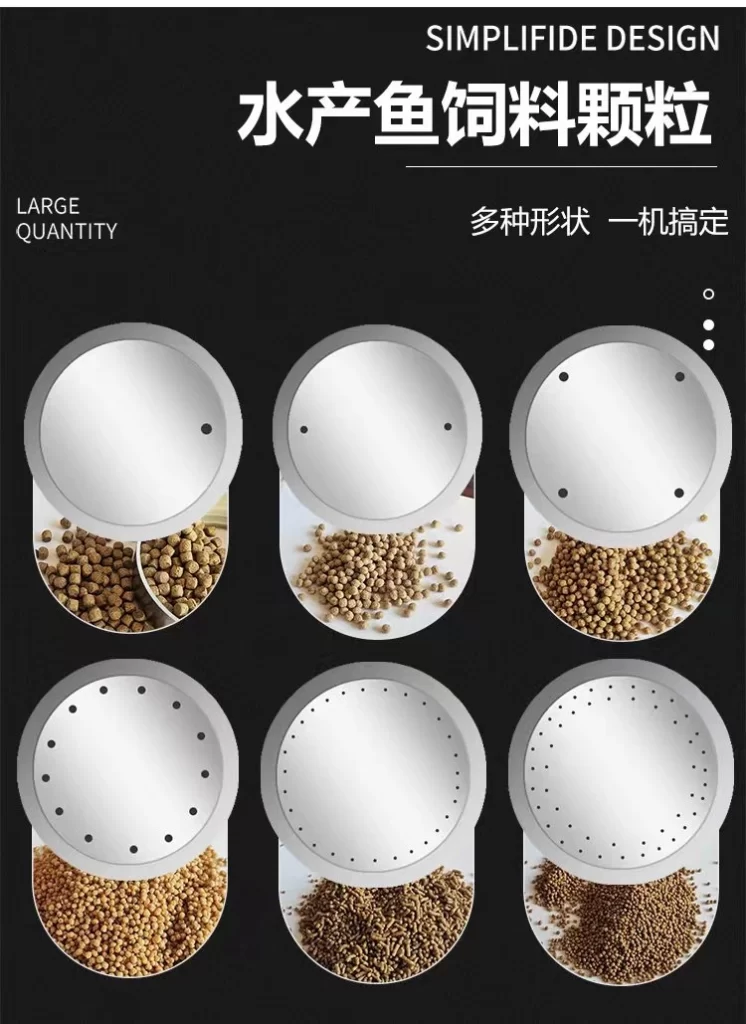
- Production of floating and sinking pellet feeds
Such as: aquatic products, pet feed - Food puffing
Raw materials include corn, rice and other cereals - Full-fat soybean puffing
Under the high temperature, high pressure and instantaneous action of the puffing machine, the anti-nutritional factors in raw soybeans can be eliminated, and the vitamins and amino acids in them can be preserved from major damage.
4 .Rice bran preservation
After puffing, rice bran can fully passivate lipase and make it non-volatile, which can effectively prevent lipase oxidation and cause rice bran to deteriorate
5 .Pretreatment of oil processing
Soybeans, sesame seeds, and rapeseed are destroyed under the extrusion, shearing and friction of the screw and sleeve of the puffing machine, and the oil is released, which greatly improves the oil yield and oil quality
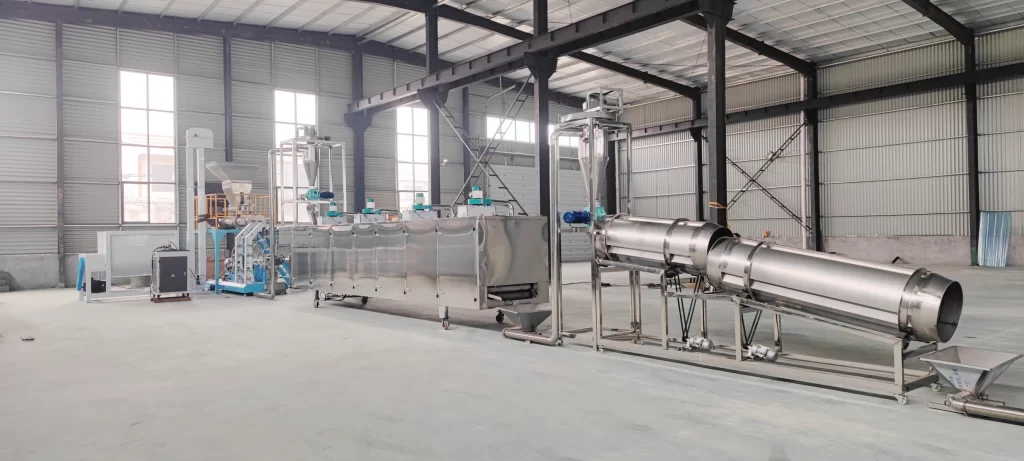
Wet Twin-Screw Extruded Feed Production Line (Expanded Introduction)
This is a fully automated wet twin-screw extruded feed production line, designed for producing expanded feed pellets such as aquafeed and pet food through a continuous, streamlined process:
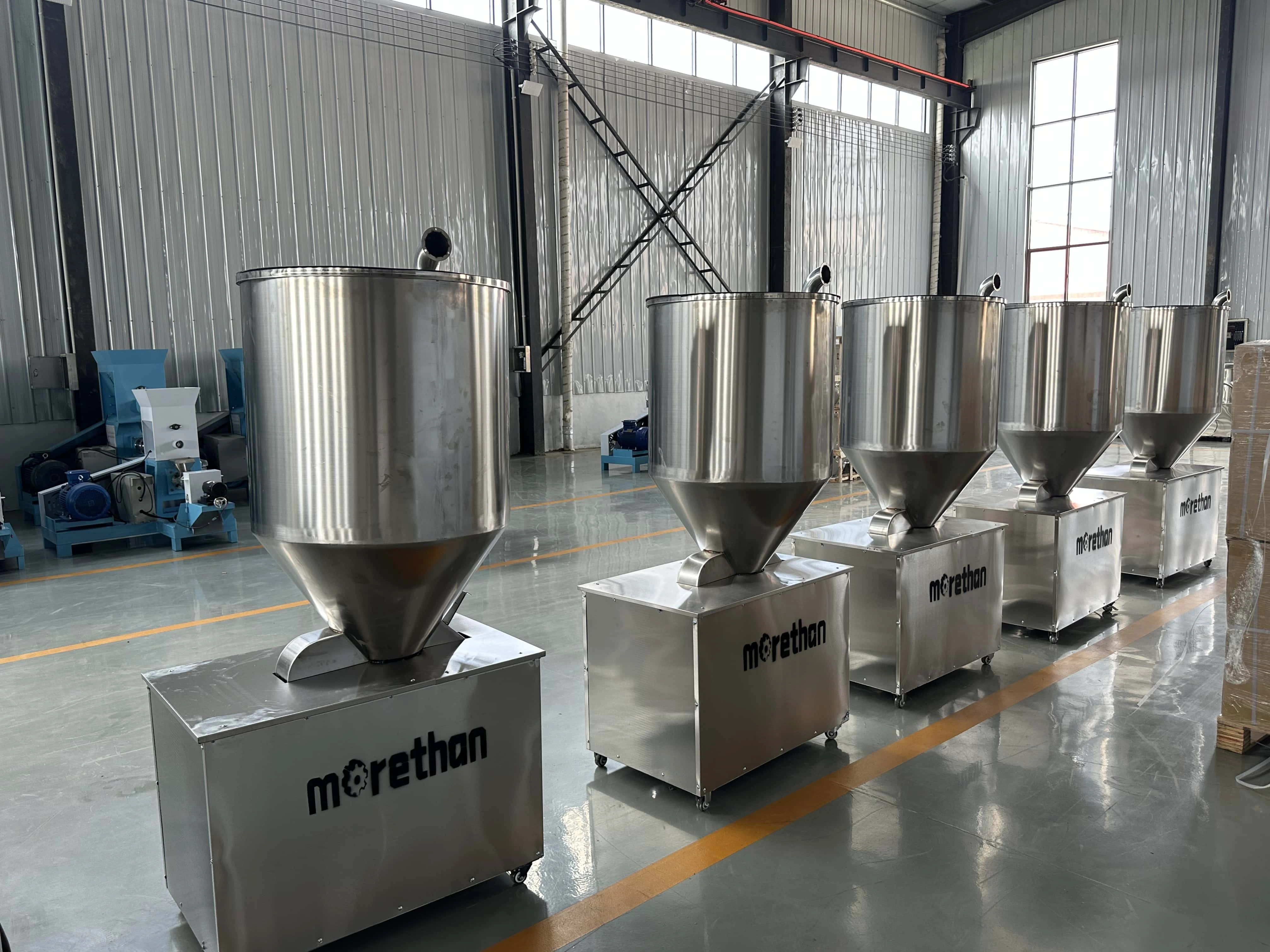
1.Raw Material Preparation & Extrusion: Raw materials are blended in the mixing mixer, then fed into the wet twin-screw extruder. With high-temperature steam from the steam generator, the materials undergo starch gelatinization, sterilization, and forming under high temperature and pressure, producing wet expanded pellets.
2.Conveying & Drying: The wet pellets are transported via bucket elevators and pneumatic conveyors to the automatic dryer, where moisture is removed to meet the standard moisture content for long-term storage.
3.Seasoning & Cooling: Dried pellets are evenly coated with oil or nutritional additives in the drum seasoning machine, then quickly cooled in the cooling tower to prevent moisture reabsorption and spoilage.
4.Grading & Screening: Finally, the pellets are sorted by size in the particle vibrating screen to remove substandard products, resulting in uniform, high-quality finished feed.
The integrated line covers the full process from raw material handling to finished product grading, with high automation, stable operation, and versatile adaptability for different feed types, delivering pellets with excellent stability and palatability.