
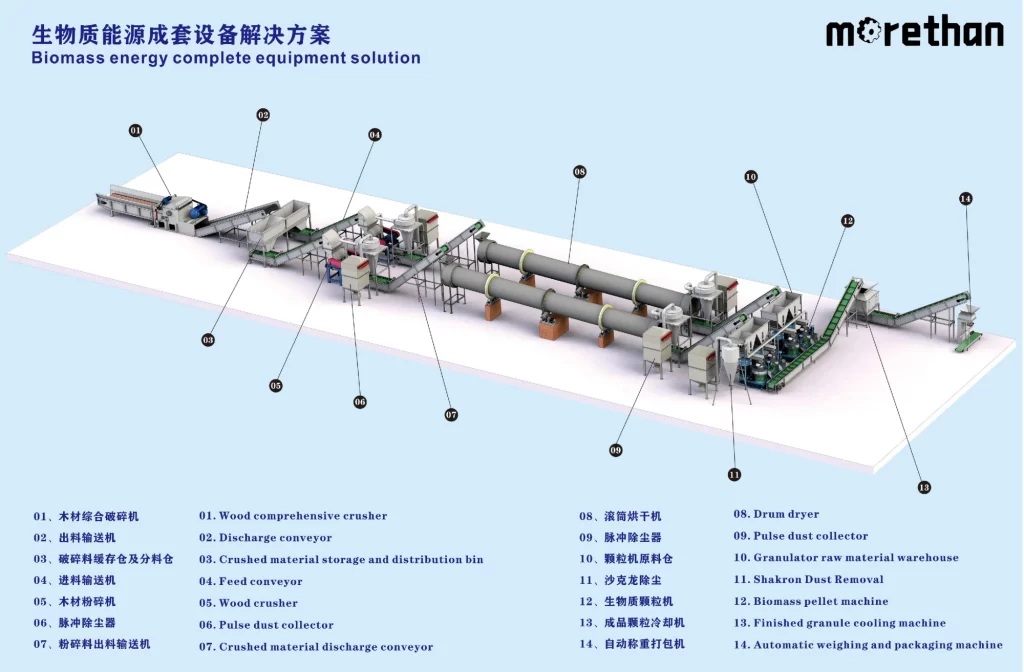
Producing high-quality wood pellets starts with raw material preparation. A reliable wood crusher is the first critical equipment in your pellet line. If the crushing effect is unstable, the final pellets will have uneven density, easy cracking, and low yield. Many new plant owners struggle when selecting a crusher, not knowing which type matches their pellet project.
1. Confirm your raw material first
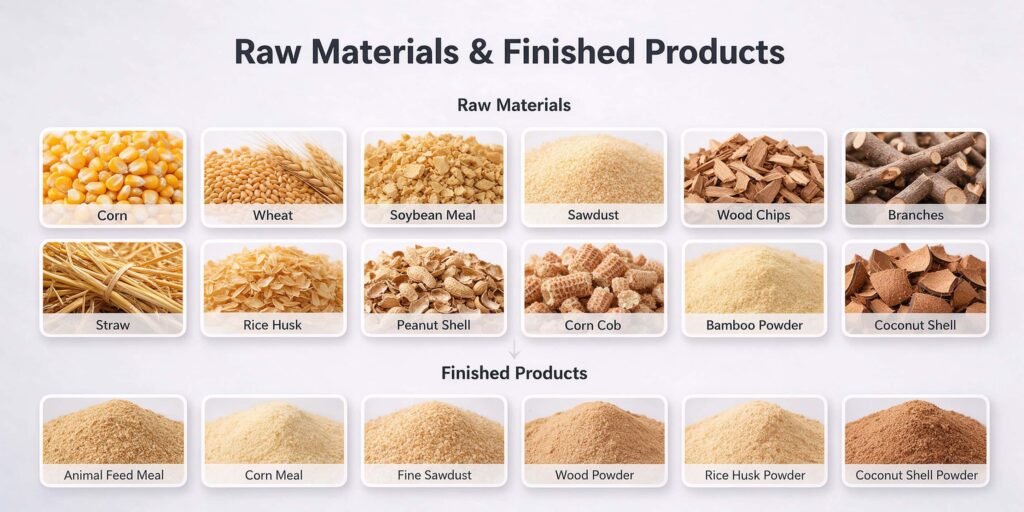
Different feedstock requires different crushing solutions.
- Sawdust: Fine crushing is usually not required; a simple screening machine may work.
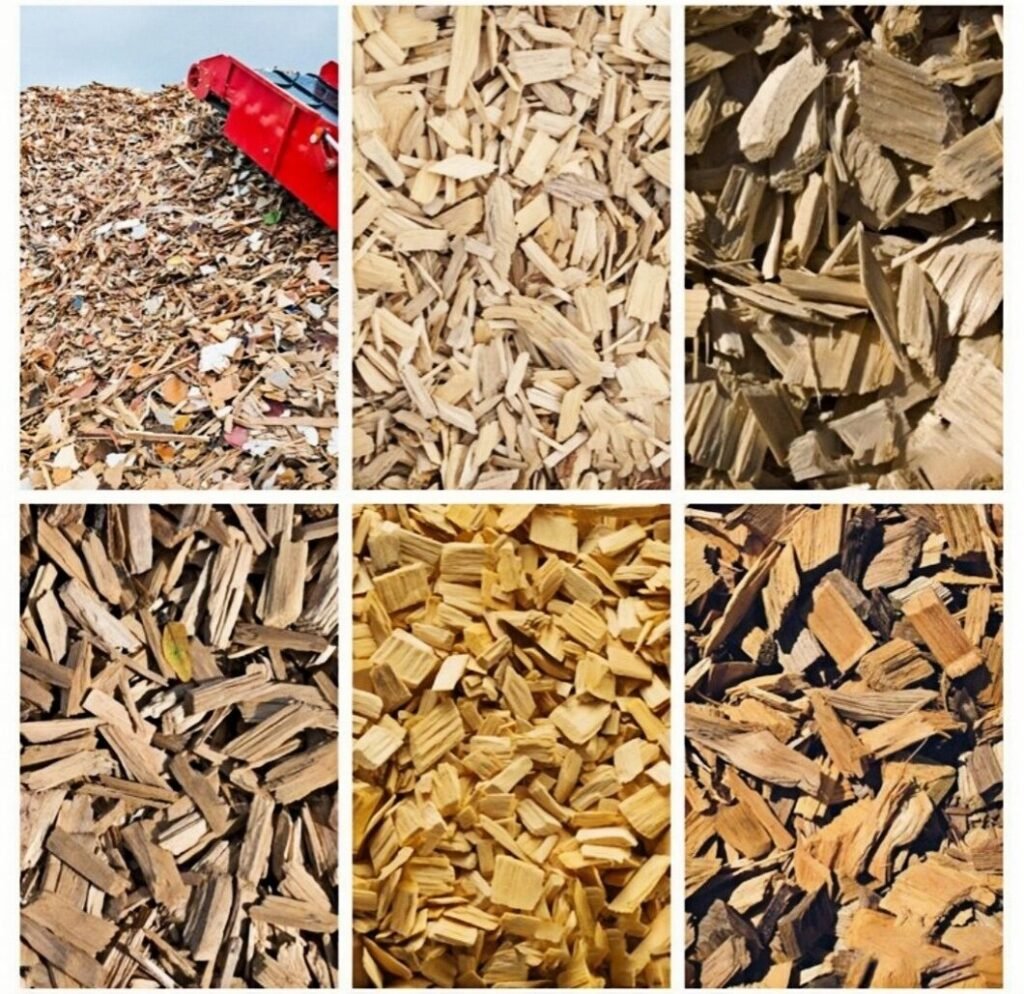
- Wood chips, branches, slabs: Need a comprehensive wood crusher or hammer mill to get uniform 3–5 mm particles.
- Hard wood, bamboo, palm kernel shell: Choose heavy-duty models with reinforced blades and thickened machine body.
For pellet making, the ideal particle size is 3–5 mm. Too coarse or too fine material will hurt pellet quality.
2. Match crusher capacity with your pellet mill
Do not separate the crusher and pellet mill when designing your line. If your pellet machine runs at 500 kg/h, your wood crusher should have a slightly higher output, such as 600–800 kg/h. This avoids raw material shortage and keeps the pellet mill running continuously.
A common mistake: buying a small crusher for a large pellet mill. The pellet machine often idles and reduces your overall efficiency.
3. Select the crusher type
Two mainstream types are widely used for pellet plants:
- Hammer mill: Good for secondary fine crushing. It makes even fine particles, perfect for small and medium pellet workshops.
- Comprehensive wood crusher: Handles big branches and wood logs directly. It is suitable if your raw material is irregular wood waste.
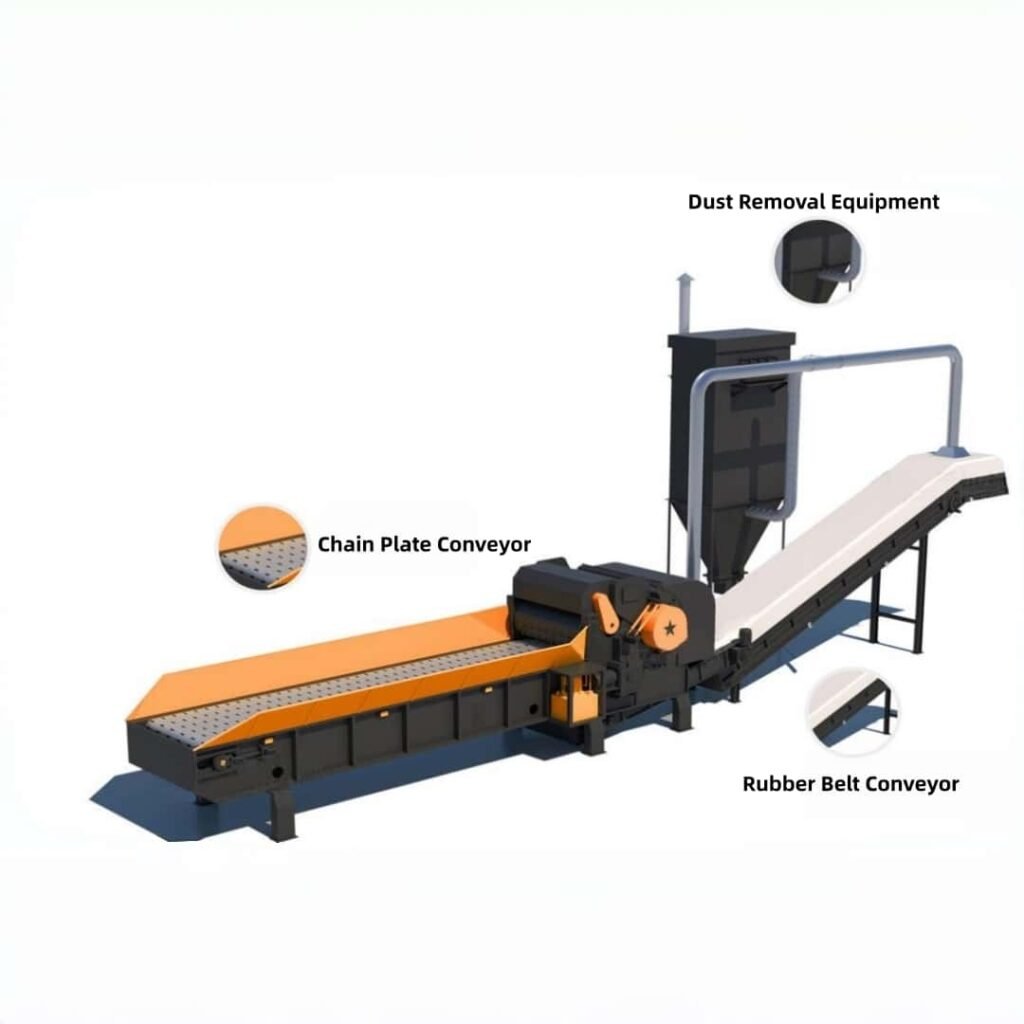
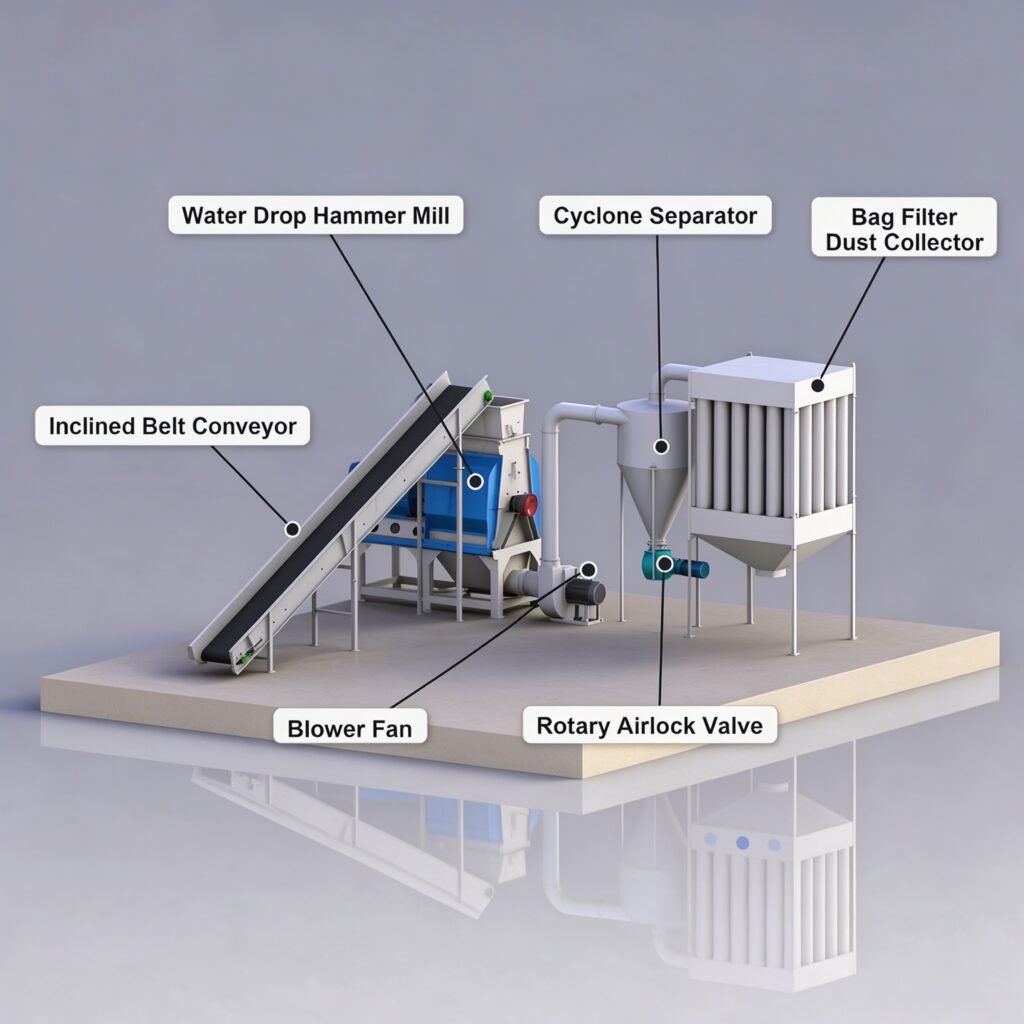
For family workshops and small pellet plants, hammer mills are more popular. For large wood waste recycling, comprehensive wood crushers are a better pick.
4. Check core details before purchase
- Blade material: High manganese steel blades bring longer service life and fewer replacement times.
- Power mode: Electric motor for fixed workshops; diesel version for sites without stable power supply.
- Dust removal system: A dust collector reduces flying dust and improves the working environment.
5. Budget and after-sales service
Price should not be your only standard. Low-cost crushers often wear fast and stop frequently. Ask the supplier about spare part supply, installation guidance and warranty terms.
Final Tip
Test material crushing samples before bulk ordering if possible. Stable particle size is the core goal for pellet production. The right wood crusher lays a solid foundation for high-quality pellets and stable profits.