
Straw and sawdust are the two most common low-density biomass raw materials for biomass pellet production worldwide. However, many pellet plant owners struggle with common production problems: material bridging, frequent clogging, low molding rate, high equipment temperature, and short wearing part service life when processing these lightweight, fluffy raw materials. Among various ring die pelletizing devices, the vertical ring die pellet mill has gradually become the mainstream choice for straw pellet and sawdust pellet manufacturing. This article will conduct an in-depth professional analysis of why this machine outperforms horizontal ring die mills for straw and sawdust processing, covering structural advantages, production performance, operational stability, and long-term economic benefits.
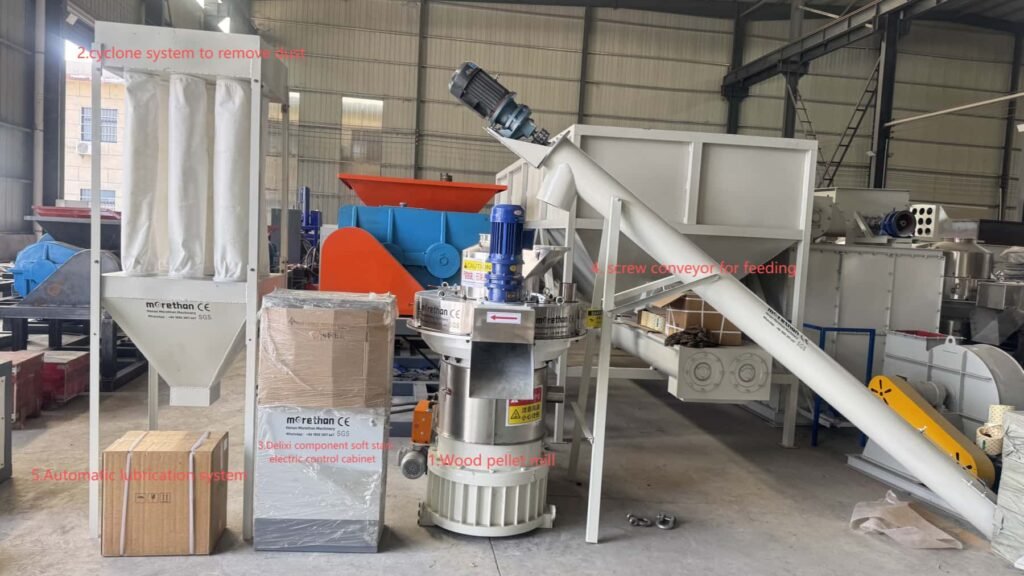
1. Core Pain Points of Straw and Sawdust Pelletizing
Before analyzing equipment advantages, it is essential to clarify the inherent characteristics of straw and sawdust that make pelletizing difficult. These two raw materials share typical lightweight, loose, and low-bulk-density features, with distinct processing pain points different from hard wood chips:
- Light weight and easy bridging: Straw and dry sawdust are fluffy. When fed horizontally, materials are prone to arching and uneven feeding, resulting in intermittent discharging and unstable pellet quality for your straw pellet and sawdust pellet line.
- High fiber and poor fluidity: Long straw fibers are easy to wind and accumulate inside the machine, causing blockage of die holes and increased extrusion resistance in biomass pellet production.
- Large moisture and heat sensitivity: These biomass materials contain residual moisture. Frictional heat generated during extrusion cannot be dissipated quickly, leading to high internal temperature, soft pellets, and easy mold deformation.
- High impurity susceptibility: Straw raw materials often contain tiny sand and soil impurities, which easily wear down rollers and dies of ordinary pellet mills, increasing maintenance costs for your pellet plant.
Traditional horizontal ring die pellet mills cannot perfectly solve the above pain points, while the vertical ring die pellet mill is structurally customized for the characteristics of straw and sawdust.
2. Structural Advantages of Vertical Ring Die Pellet Mill for Straw & Sawdust
The fundamental difference between vertical ring die pellet mills and horizontal ring die models lies in the vertical layout of the cavity, feeding method, and operation logic, which precisely targets the processing weaknesses of straw and sawdust for biomass pellet making.
2.1 Gravity Vertical Feeding, Zero Blockage and Bridging
Different from the horizontal forced feeding of horizontal ring die machines, the vertical ring die pellet mill adopts an upper gravity feeding design. Straw and sawdust fall vertically into the pelletizing chamber by their own gravity, and are evenly distributed on the inner wall of the ring die under the action of centrifugal force. This structure completely avoids material arching, accumulation and uneven feeding problems that frequently occur in horizontal ring die equipment. Even for ultra-loose sawdust and crushed straw, continuous and stable feeding can be realized without manual auxiliary feeding, greatly improving production continuity of your straw pellet production line.
2.2 Static Die and Rotating Roller, Uniform Extrusion Force
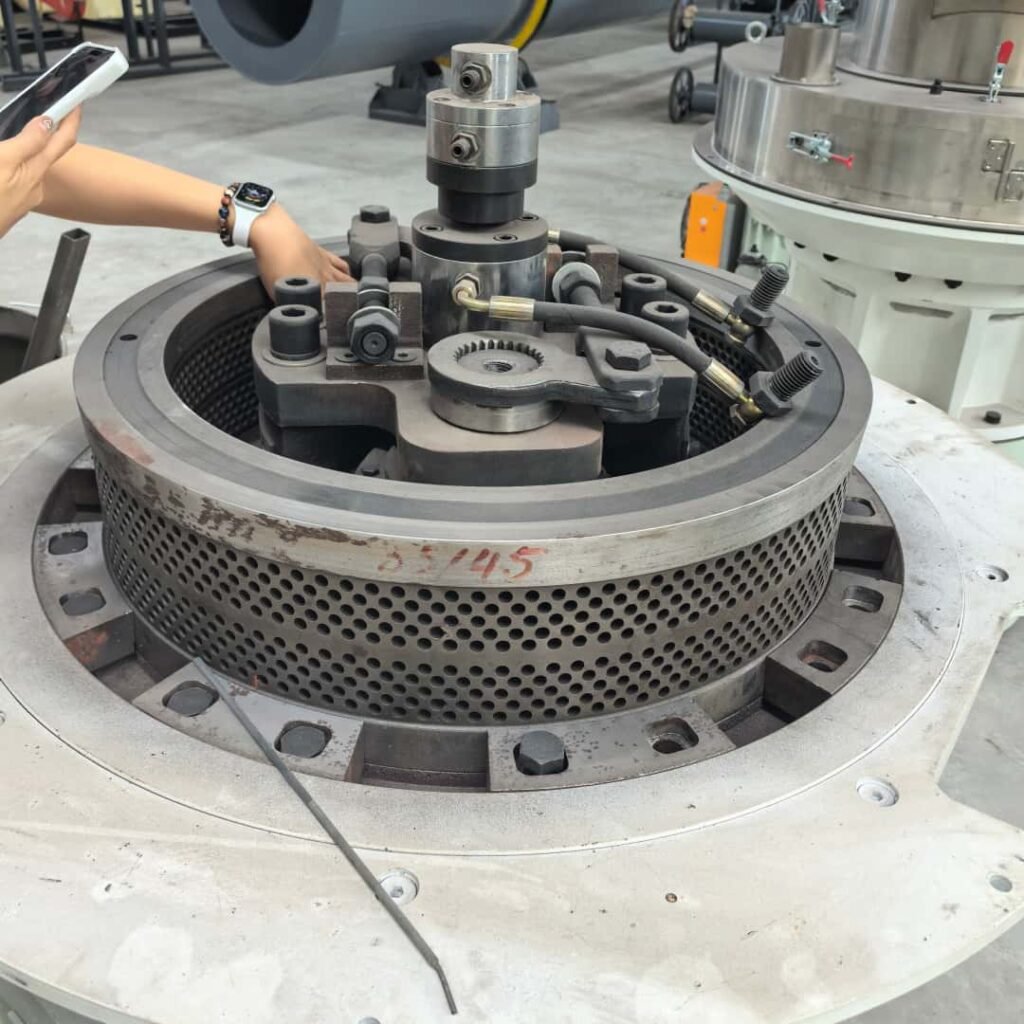
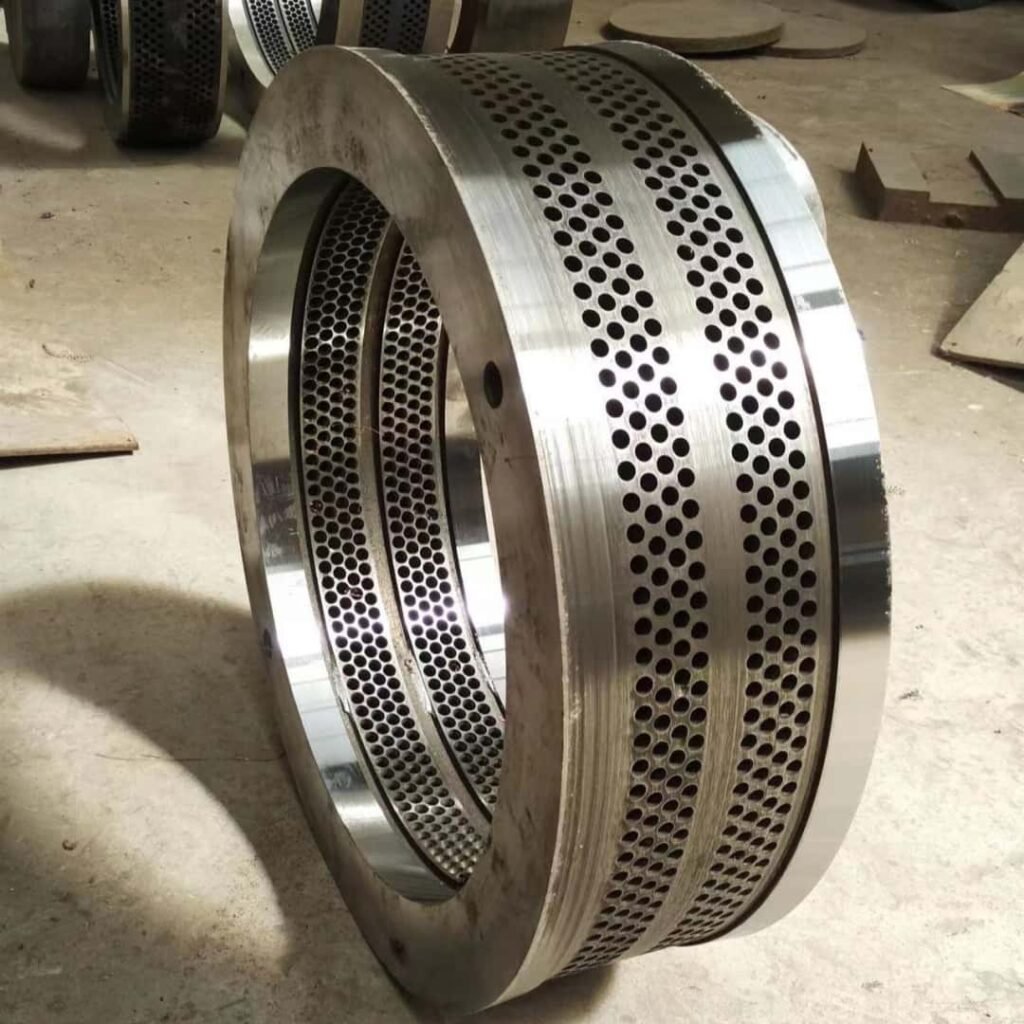
The core working principle of the vertical ring die pellet mill is fixed ring die and rotating pressure roller, which is a revolutionary optimization for biomass processing. Traditional horizontal ring die models have rotating dies and fixed rollers, which easily drive materials to swirl and cause partial accumulation. In contrast, the static die design eliminates material swirling dead angles, ensures that straw and sawdust are uniformly extruded in each die hole, significantly improves the pellet forming rate, and makes the finished straw pellets and sawdust pellets uniform in density and smooth in surface.
2.3 Open Vertical Cavity, Efficient Heat Dissipation
Heat accumulation is the biggest killer of straw and sawdust pellet production. The open vertical cavity structure of the vertical ring die pellet mill forms a natural air convection channel, matched with an independent side exhaust fan system, which can quickly take away the frictional heat and water vapor generated during extrusion. The internal working temperature is stably controlled below 80°C, avoiding pellet softening, cracking and die hole carbonization caused by overheating. In comparison, the closed structure of horizontal ring die mills leads to poor heat dissipation, with internal temperature exceeding 200°C in long-term operation, which not only affects pellet quality but also accelerates the wear of bearings and gears in biomass pellet equipment.
3. Performance Comparison: Vertical Ring Die VS Horizontal Ring Die Pellet Mills
To intuitively reflect the superiority of vertical ring die pellet mills in straw and sawdust processing, we have sorted out a core performance comparison with horizontal ring die pellet mills:
- Feeding stability: Vertical ring die (excellent, no blockage or bridging); Horizontal ring die (average, easy material arching & uneven feeding)
- Heat dissipation capacity: Vertical ring die (natural convection + exhaust, low stable working temperature); Horizontal ring die (closed chamber, serious heat accumulation, high internal temperature)
- Raw material adaptability: Vertical ring die (fully adapted to loose straw and fine sawdust); Horizontal ring die (suitable for hard wood chips, poor performance for lightweight fluffy biomass)
- Continuous working time: Vertical ring die (10–20 hours non-stop industrial operation); Horizontal ring die (only 4–6 hours continuous work, needs shutdown cooling)
- Wearing part life: Vertical ring die (uniform stress, longer service life); Horizontal ring die (uneven roller & die wear, frequent replacement)
- Pellet forming density: Vertical ring die (high and uniform density, low breakage rate); Horizontal ring die (uneven density, high pellet breakage rate)
4. Actual Production Benefits for Straw and Sawdust Processing
4.1 Higher Yield and Lower Waste Rate
A single vertical ring die pellet mill supports a production capacity of 1–10 tons per hour. The stable feeding and uniform extrusion structure greatly reduces unformed powder residues. The powder waste rate of straw and sawdust processing is controlled below 3%, far lower than the 8%–15% of horizontal ring die equipment. For large-scale pellet plants, this means a substantial reduction in raw material costs and a significant increase in effective output of biomass pellets.
4.2 Reduced Maintenance and Operating Costs
The vertical ring die pellet mill adopts wear-resistant stainless steel dies processed by vacuum quenching and high-precision drilling technology, with high overall hardness and strong anti-impurity ability, which can resist the wear of trace impurities in straw and sawdust. The vertical stress structure makes the rollers and dies bear force evenly, avoiding local excessive wear. Compared with horizontal ring die machines, the replacement cycle of wearing parts is extended by more than 2 times, and the daily maintenance workload and cost are greatly reduced for your biomass pellet plant.
4.3 Better Finished Pellet Quality
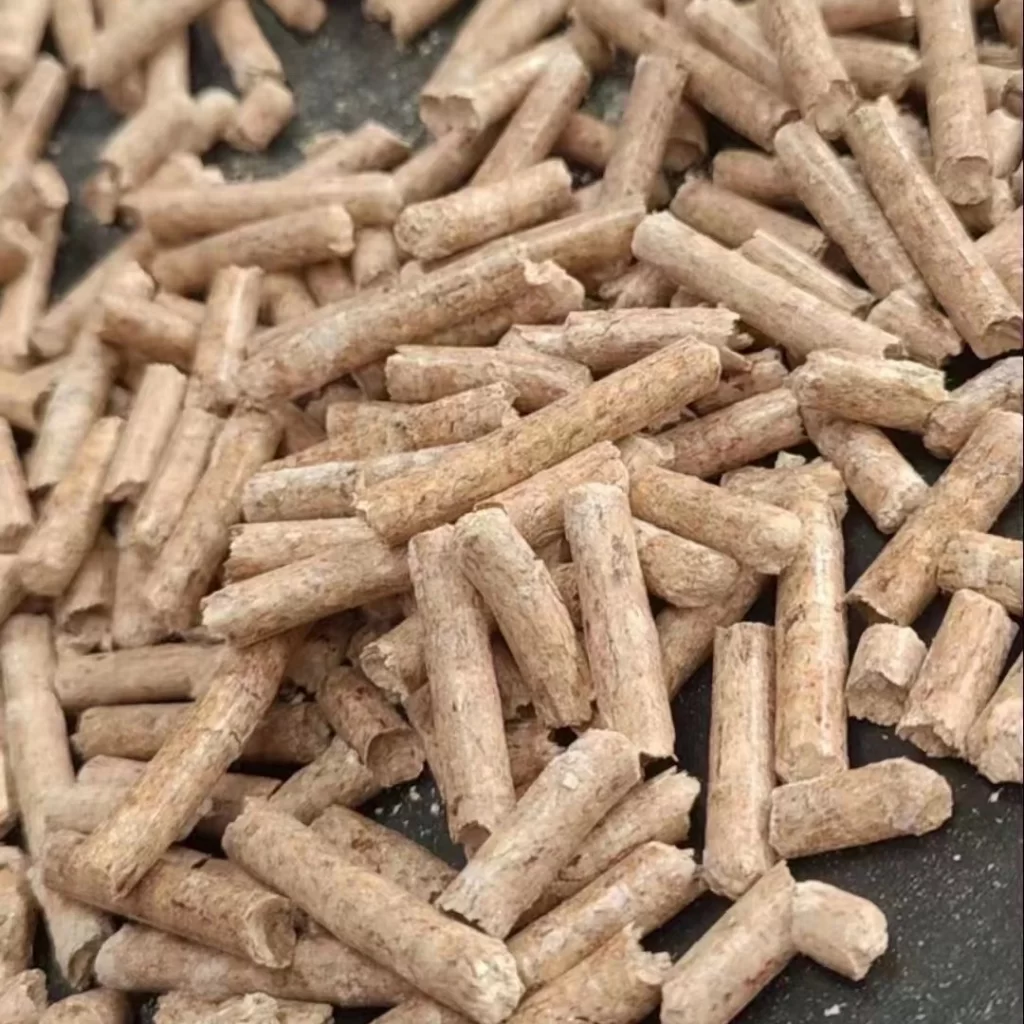
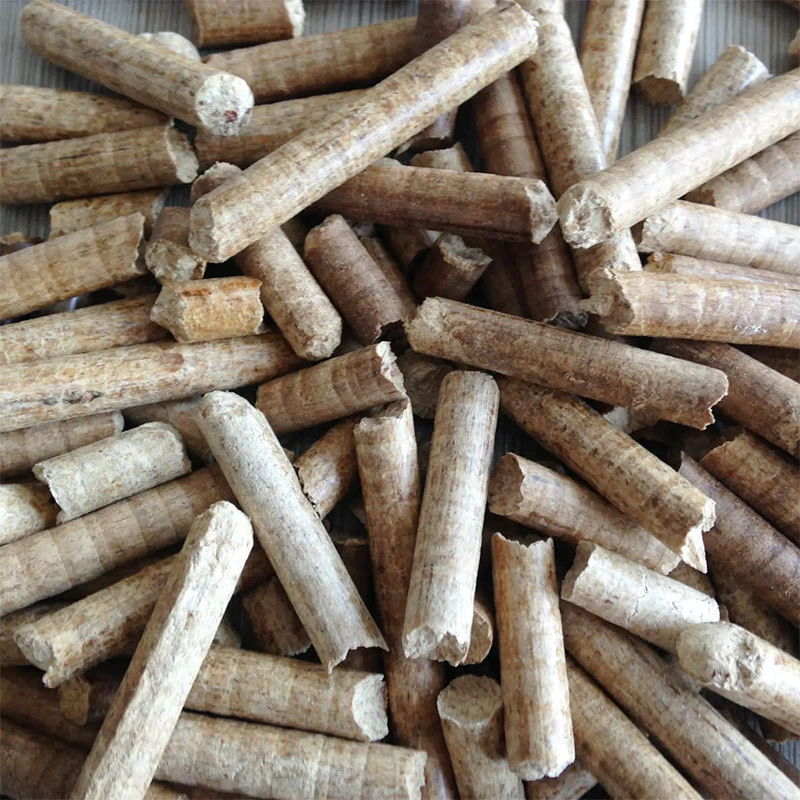
Straw and sawdust pellets processed by vertical ring die equipment have uniform particle size (6–12mm adjustable), high density, good hardness and low moisture content. The finished biomass pellets have smooth surface, no cracks, low breakage rate, and are more in line with international biomass fuel standards, which is more conducive to storage, transportation and export sales, and improves product market competitiveness.
5. Who Is Suitable for Choosing Vertical Ring Die Pellet Mill?
This equipment is the optimal choice for users who mainly process straw and sawdust raw materials, including:
- Biomass pellet factories focusing on agricultural waste recycling (wheat straw, rice straw, corn stalks)
- Wood processing factories with a large amount of waste sawdust and wood shavings
- Industrial energy supply plants requiring long-term continuous biomass pellet production
- Users pursuing low maintenance cost and high finished product qualification rate
If your raw materials are mainly hard wood chips, traditional horizontal ring die mills can also meet the demand; but for lightweight, loose straw and sawdust, vertical ring die pellet mills have irreplaceable structural and performance advantages.
6. Final Verdict
Yes, the vertical ring die pellet mill is definitely the better and more professional choice for straw and sawdust pelletizing.
Its vertical gravity feeding, static die & rotating roller structure, efficient heat dissipation system and stable continuous production capability perfectly solve the multiple industry pain points of straw and sawdust processing such as easy blockage, difficult heat dissipation, low yield and easy wear. Compared with horizontal ring die pellet mills, it has obvious advantages in production stability, finished product quality, operating cost and long-term economic benefits, and is the mainstream industrial-grade equipment for lightweight biomass pellet production at present.
If you have any questions about straw and sawdust pellet production, or need a custom biomass pellet production line tailored to your raw materials, site space and target output, please feel free to contact us. We can design and configure the complete pellet plant solution according to your actual working conditions.