
In the mineral processing, chemical, building materials, and agricultural industries, moisture removal of bulk granular and powdery materials is an essential production link. As the most widely used continuous drying equipment at present, the rotary dryer stands out among numerous drying devices due to its stable operation, large processing capacity, and strong material adaptability. This article will deeply analyze the working principle, internal operation logic, and core advantages of the rotary dryer, helping enterprise buyers and industry practitioners fully understand its application value.
1. Basic Overview of Rotary Dryer
A rotary dryer, also known as a rotary drum dryer, is a continuous drying equipment relying on thermal convection and rotary motion. It mainly processes bulk, granular, sludge, and powdery materials with certain fluidity, such as ore sand, coal slime, cement clinker, sawdust, crop straw, and chemical raw materials. Different from intermittent drying equipment, the rotary dryer realizes uninterrupted feeding, drying, and discharging, which is highly suitable for large-scale industrial production lines.
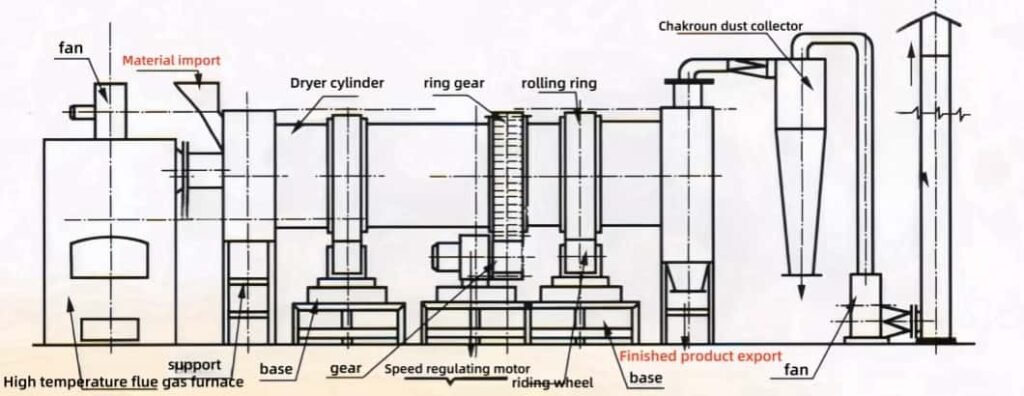
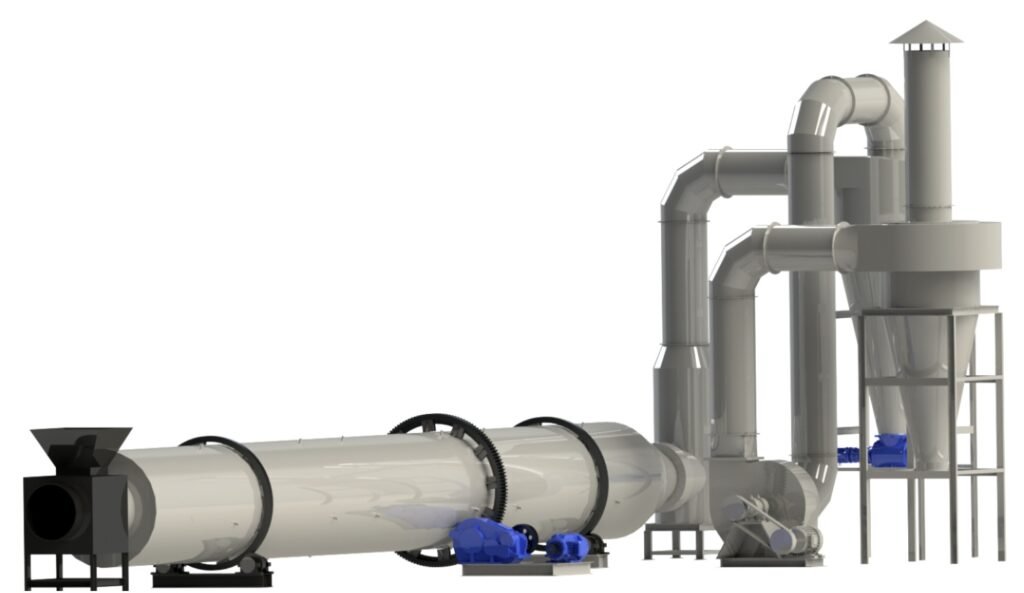
The overall structure of the equipment is simple and compact, mainly composed of a rotating drum, feeding device, discharging device, heating system, transmission system, support roller device, and sealing structure. Each component cooperates precisely to ensure the continuous and efficient progress of the material drying process.
2. In-Depth Working Principle of Rotary Dryer
The core working logic of the rotary dryer is heat and mass transfer coupling. It uses the rotating drum to drive materials to flip and move, and makes full use of hot air heat energy to evaporate the surface and internal moisture of materials, finally completing material dehydration. The entire working process can be divided into three continuous stages, with a standardized and efficient operation process.
2.1 Material Feeding and Preheating Stage
Wet materials are evenly sent into the inclined rotating drum through the quantitative feeding device. The drum is designed with a certain inclination angle (usually 3°-5°), which provides basic power for the axial movement of materials. At the initial stage of entering the drum, materials contact with high-temperature hot air preliminarily, and the surface moisture is preheated and softened, laying a foundation for subsequent rapid drying. At this stage, the internal lifting plates of the drum start to lift materials to avoid material accumulation and bonding.
2.2 Continuous Flipping and Drying Stage (Core Stage)
Driven by the transmission motor, the drum rotates at a constant low speed. The evenly distributed lifting plates inside the drum continuously lift, scatter, and drop the materials. This cyclic flipping motion makes the materials form a uniform material curtain in the drum, which greatly increases the contact area between materials and high-temperature hot air.
The hot air generated by the heating system flows in the drum in a counter-current or co-current manner with the materials. Through full contact, the hot air continuously transfers heat to the materials, evaporates the free moisture and bound moisture inside the materials, and the water vapor is discharged out of the equipment along with the exhaust system. The counter-current drying design is the mainstream of industrial rotary dryers, which can make the hot air fully contact with wet materials and improve heat utilization efficiency.
2.3 Material Cooling and Discharging Stage
After continuous flipping and heat exchange drying, the materials with qualified moisture content gradually move to the discharging end along the inclined drum. The high-temperature dry materials will go through a short natural cooling section at the discharging end to reduce the material temperature, avoiding scalding and material secondary moisture absorption. Finally, the dry materials are uniformly discharged through the discharging device, and the entire continuous drying process is completed.
3. Core Advantages of Rotary Dryer
Compared with flash dryers, tray dryers and other drying equipment, rotary dryers have more prominent comprehensive performance in industrial large-scale production, and their core advantages are reflected in the following six aspects:
3.1 Super Strong Material Adaptability
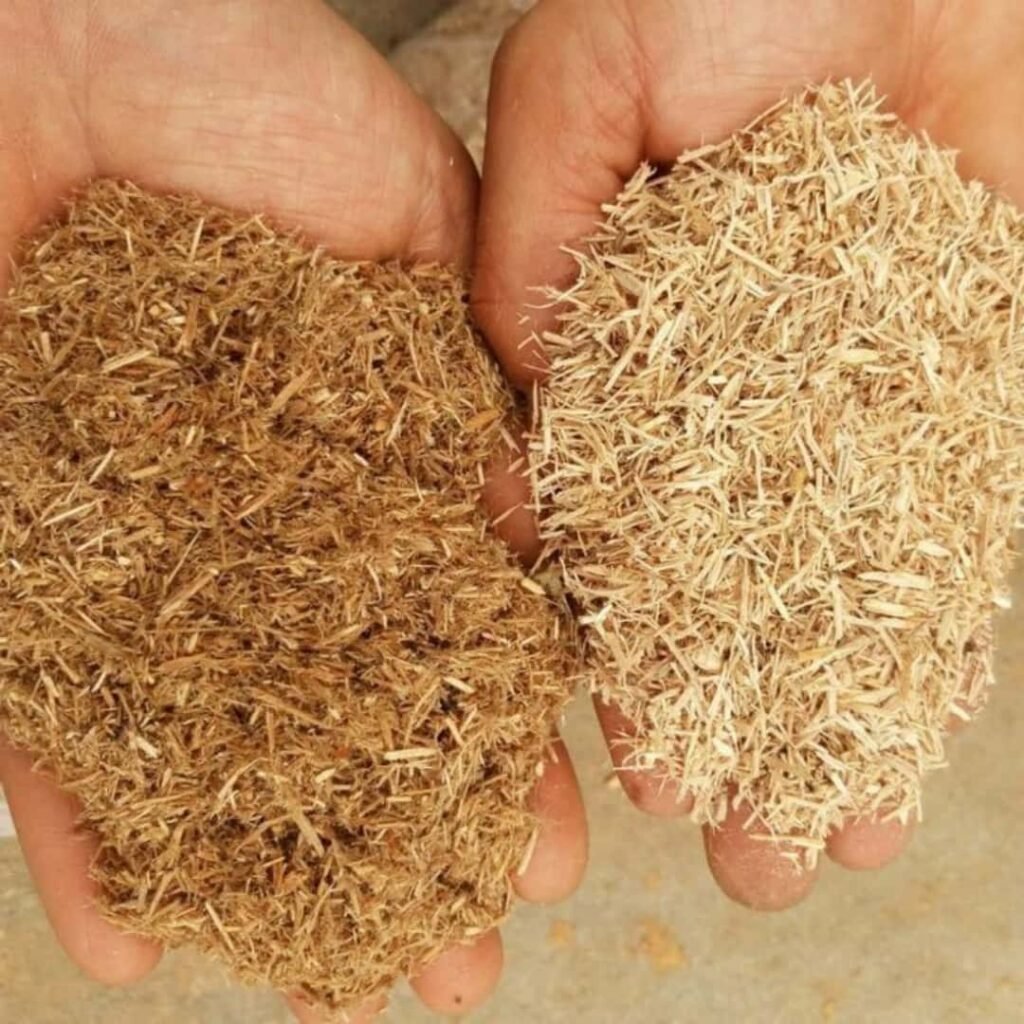
The rotary dryer has no strict requirements on material type, particle size and moisture content. It can dry various granular, powdery, block and sludge materials, whether it is hard ore materials or light biomass materials. It can adapt to materials with moisture content ranging from 20% to 80%, and can complete precise drying according to customer production requirements, with extremely wide application scenarios.
3.2 Large Processing Capacity and High Production Efficiency
Relying on the long drum cavity and continuous operation mode, the rotary dryer supports large-scale batch production. Its single-machine processing capacity can range from 1t/h to 100t/h, which is far higher than that of intermittent drying equipment. The internal lifting plate structure ensures that materials are fully dispersed, avoids drying dead angles, and effectively shortens the single-batch drying cycle, realizing high-efficiency continuous production.
3.3 Low Energy Consumption and High Heat Utilization Rate
The optimized counter-current heat exchange design makes the hot air fully contact with materials layer by layer, avoiding excessive heat loss. At the same time, the equipment is equipped with a sealed heat preservation structure, which reduces external heat dissipation. Compared with traditional drying equipment, its heat utilization rate is increased by more than 30%, and the overall operating energy consumption is low, which effectively reduces the long-term production cost for enterprises.
3.4 Stable Operation and Low Failure Rate
The overall structure of the rotary dryer is simple, with few vulnerable parts. The rotating drum runs stably at low speed, without severe vibration and impact. The transmission and support system adopts mature industrial design, which can adapt to long-term uninterrupted operation. The equipment has low daily maintenance cost, simple operation, and does not need complex professional operation technology, reducing enterprise labor and maintenance costs.
3.5 Good Drying Uniformity and High Finished Product Quality
The cyclic flipping and uniform dispersion of materials in the drum ensure that every particle of material can fully contact with hot air. There is no phenomenon of local over-drying or incomplete drying. The moisture content of the finished material is uniform and controllable, which can well meet the strict material quality requirements of subsequent processing procedures.
3.6 Flexible Customization and Wide Application Range
The equipment can adjust parameters such as drum rotating speed, hot air temperature, feeding speed and drum inclination angle according to different materials and drying standards. It can also customize internal lifting plate structures and heating systems for special materials. It is widely used in mining, metallurgy, chemical industry, building materials, biomass energy, agricultural processing and other fields.
4. Applicable Scenarios of Rotary Dryer
Based on its superior performance, rotary dryers have become standard supporting equipment in many industrial production lines. The mainstream applicable materials include coal slime, lignite, river sand, quartz sand, iron ore powder, slag, cement raw material, sawdust, wood chips, crop straw, fertilizer raw materials, chemical sludge and so on. It is the preferred drying equipment for medium and large industrial drying projects due to its stable performance and cost-effective operation.
5. Summary
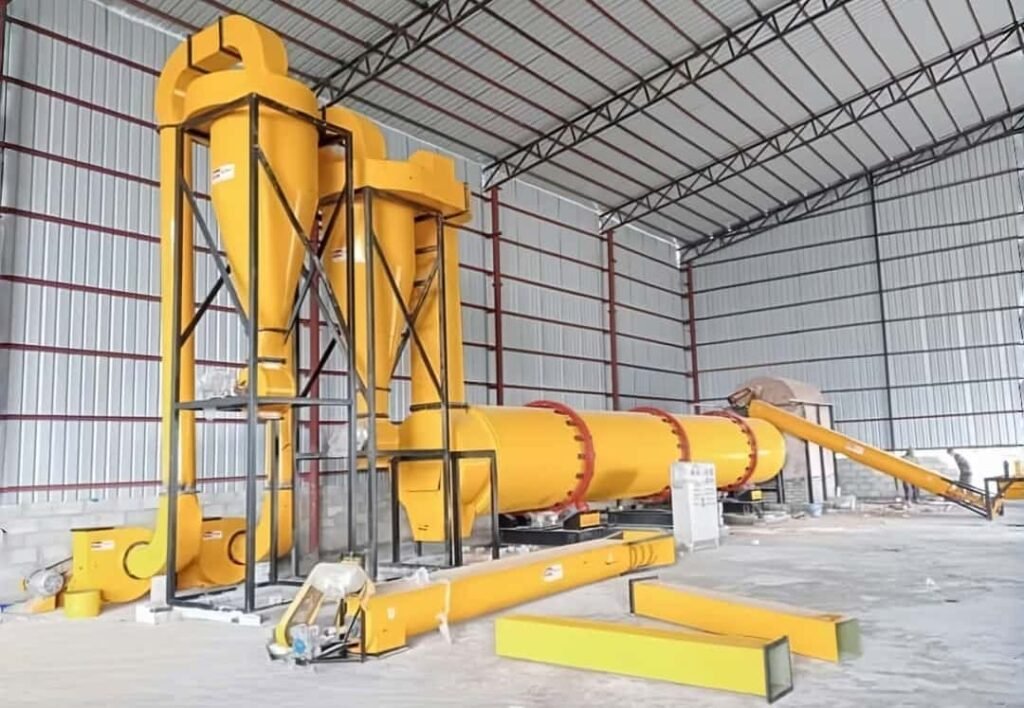
The rotary dryer realizes efficient and continuous material dehydration through the perfect combination of mechanical rotary motion and thermal heat exchange. With the advantages of strong adaptability, large output, low energy consumption, stable operation and high finished product quality, it has irreplaceable core status in the field of industrial drying. For industrial enterprises that need large-scale material drying, the rotary dryer can effectively improve production efficiency, reduce comprehensive production costs, and create stable economic benefits for enterprises.