
For home users and small farms, choosing a feed pellet mill is mainly about matching the machine to the actual feeding needs. A large commercial production line may offer higher automation, but it can also require more space, investment, power, and operating experience.
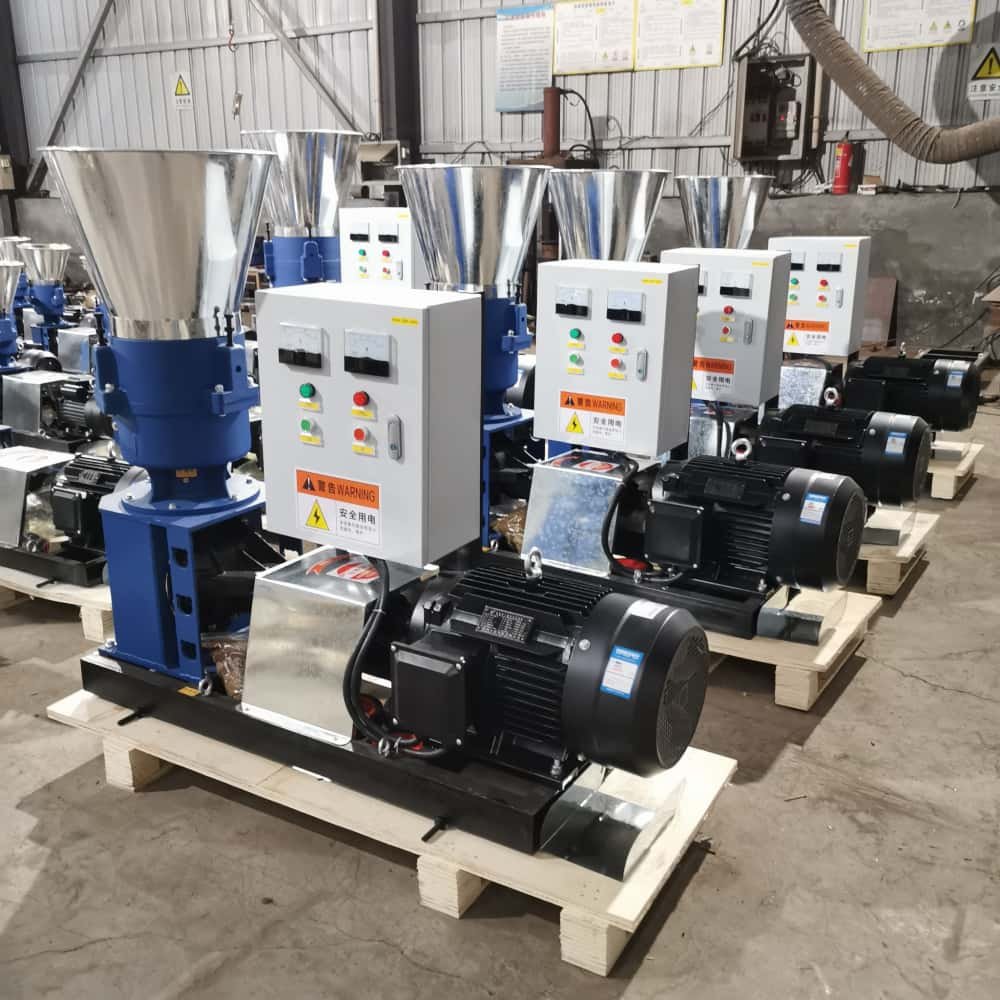
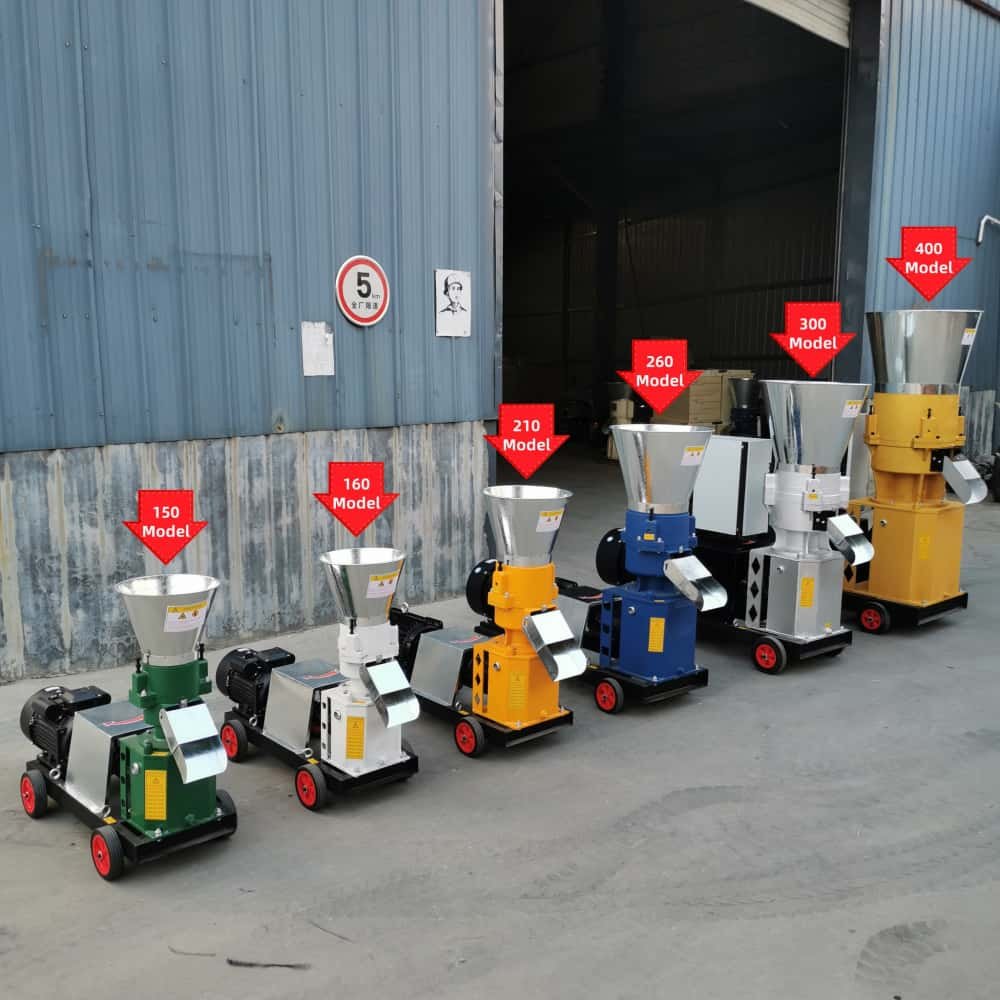
For many small-scale users, a flat die feed pellet mill can be a practical starting solution. It is suitable for small-batch production, flexible feed preparation, and farms that mainly produce feed for their own animals. However, it is not automatically the best choice for every application.
Why Choose a Flat Die Feed Pellet Mill?
A flat die pellet mill is commonly considered for:
- Home-based animal feeding
- Small farms and family livestock operations
- Poultry, cattle, sheep, rabbits, and other livestock
- Small-batch or seasonal feed production
- Farms using local grains and agricultural by-products
- Users who want to begin with a single machine
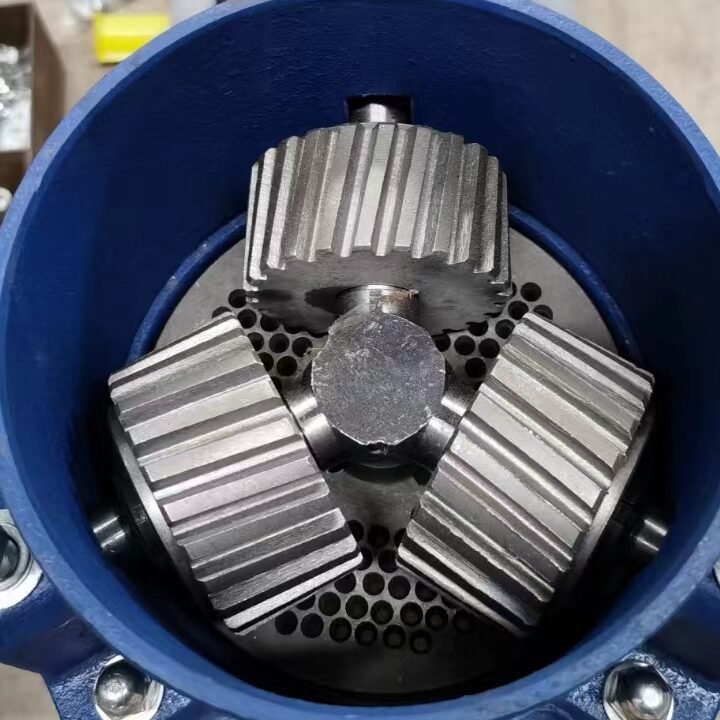
The machine compresses prepared feed materials through a die to form compact pellets. Compared with loose feed, pellets can be easier to handle, store, transport, and distribute. They can also help farms organize different feed formulas according to animal type or growth stage.
However, pellet quality depends on the complete preparation process. The pellet mill itself cannot correct unsuitable raw materials, an unbalanced formula, or poor mixing.
Main Advantages for Small Farms
1. Suitable for Small-Batch Production
Small farms may not need to produce feed continuously every day. They may prepare feed according to the number of animals, seasonal changes, or the availability of local raw materials.
A flat die pellet mill can be useful in this situation because the operator can produce feed in batches instead of investing immediately in a complete automated line. It may also be suitable for farms that want to test pellet production before expanding their processing capacity.
2. Flexible for Different Feed Formulas
Small farms often use different formulas for poultry, cattle, sheep, or rabbits. Feed ingredients may also change according to local supply and animal growth stages.
When the raw materials are properly prepared and the machine is correctly configured, a flat die pellet mill can support this type of flexible production. The appropriate die size and feed formula should be selected according to the animal, material characteristics, and desired pellet size.
3. Relatively Simple Starting Setup
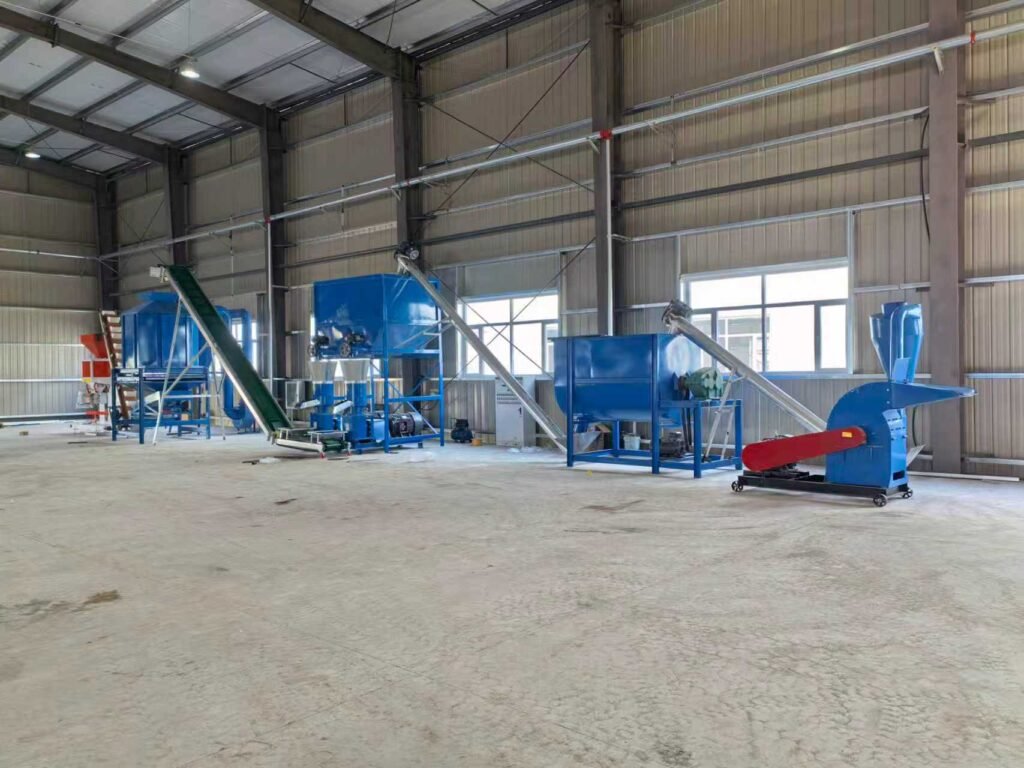
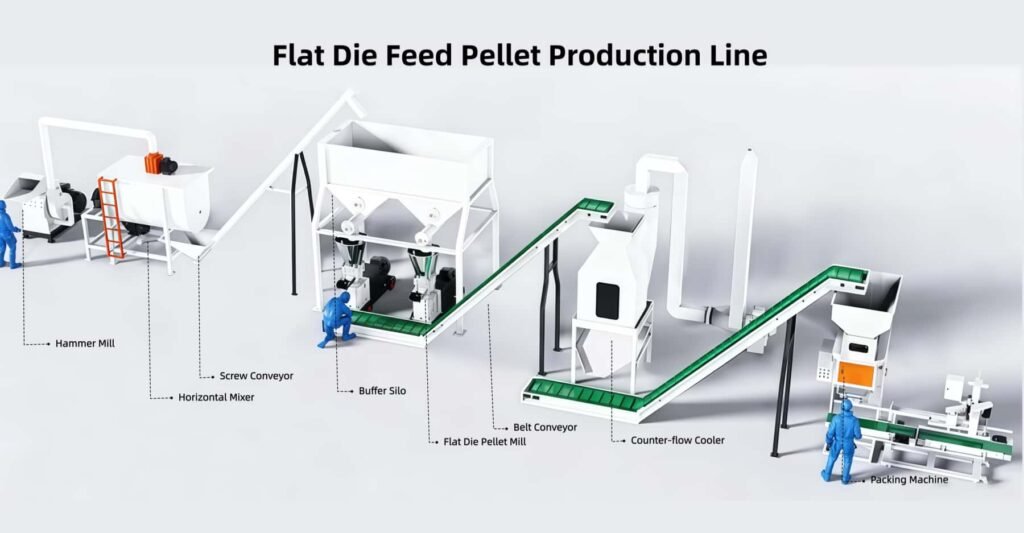
A complete feed pellet line may include a crusher, mixer, pellet mill, cooler, screener, conveyor, and packing machine. For a small farm, installing all these units at the beginning may not be necessary.
A standalone pellet mill can be used as the first stage of a small feed-processing setup. Other equipment can be added later if the farm’s output increases or the production process becomes more automated.
4. Easier to Fit into a Small Workshop
Workshop space is an important consideration for home users and small farms. A single-machine setup generally requires less space than a complete production line, although the actual installation area still depends on the machine model, raw material handling method, electrical system, and working space required by the operator.
What Should Users Pay Attention To?
A flat die feed pellet mill is not a substitute for raw material preparation. Before pelleting, users should check the following points:
- Are the raw materials clean and free from stones or metal pieces?
- Is the particle size suitable for the selected die?
- Is the moisture level appropriate for the material?
- Are the ingredients mixed evenly?
- Does the formula contain enough natural binding components?
- Is the fiber content suitable for the selected machine?
The correct moisture level varies according to the material and formula. Users should not apply one fixed value to every type of feed. Trial testing is recommended when the formula contains unusual materials, a high proportion of fiber, or agricultural by-products with unstable moisture.
Regular inspection is also important. Worn dies, rollers, belts, or other working parts may affect pellet quality and machine performance. Operators should follow the supplier’s maintenance instructions and replace wear parts when necessary.
When May It Not Be the Best Choice?
A flat die pellet mill may not be the most suitable solution when the farm requires:
- Continuous high-volume production
- Fully automated material handling
- Automatic cooling, screening, and packing
- Highly consistent commercial output
- A complete production record and process-control system
- Large-scale feed production for external customers
In these cases, a complete feed pellet production line may provide better process coordination. The line can be planned around crushing, mixing, pelleting, cooling, screening, conveying, and packing requirements.
The right solution depends on the real production target. Choosing a machine with a very high theoretical output does not necessarily improve the economics of a small farm if the machine is rarely used or requires more infrastructure than the farm can support.
Flat Die or Ring Die Pellet Mill?
| Factor | Flat Die Feed Pellet Mill | Ring Die Feed Pellet Mill |
|---|---|---|
| Suitable scale | Home use and small farms | Medium- and large-scale production |
| Production mode | Small-batch or periodic production | Continuous production |
| Installation | Relatively simple starting setup | Usually requires a more complete system |
| Flexibility | Convenient for changing small-batch formulas | Better for stable, regular production |
| Supporting equipment | Can be added step by step | Commonly integrated into a production line |
| Best suited to | Internal farm use and small projects | Commercial feed manufacturing |
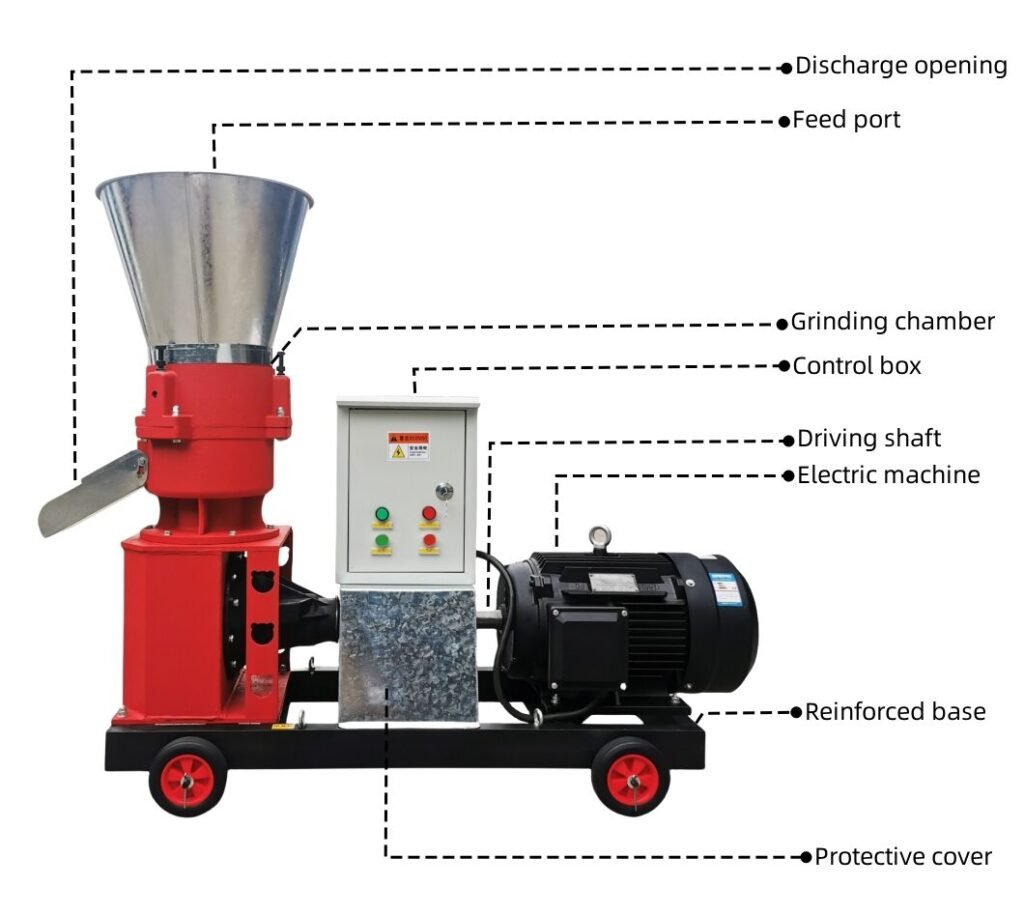
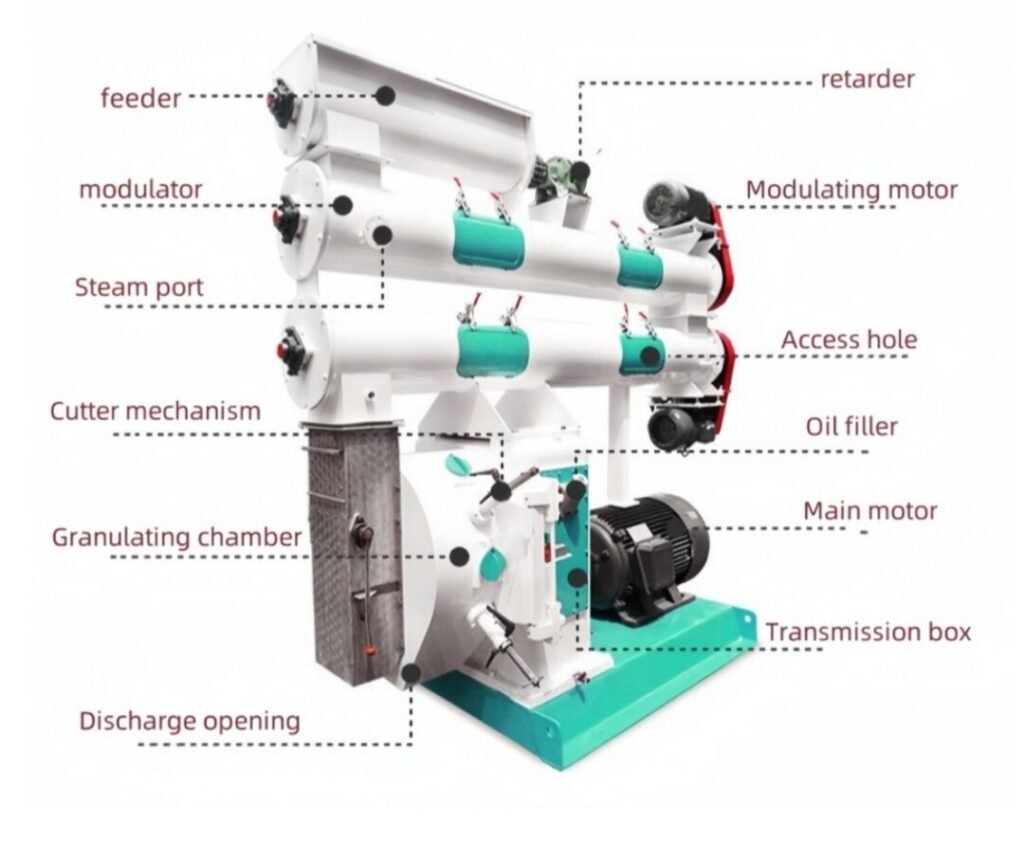
Ring Die Feed Pellet Mill
This table is a general guide rather than a fixed rule. The final choice should consider raw materials, target output, local voltage, workshop layout, labor conditions, and future expansion plans.
How to Select the Right Solution
Before purchasing a flat die feed pellet mill, prepare the following information for the supplier:
- The animal species and intended feed application
- The main raw materials and their approximate proportions
- The desired pellet size
- The expected daily or weekly output
- The local power supply and voltage
- The available workshop space
- Whether future crushing, mixing, cooling, or packing equipment may be added
If the raw material is difficult to process, sample testing can help confirm whether additional crushing, mixing, drying, or other preparation is required. It can also help evaluate the suitability of the die and the expected pellet-forming result.
Morethan Machinery’s Project Support
Henan Morethan Machinery Equipment Co., Ltd. provides feed pellet machinery as part of its broader range of pellet machines, biomass equipment, crushers, dryers, and production-line solutions.
For different project sizes, the company can support both single-machine selection and customized production-line planning. The service scope includes project consultation, solution design, equipment manufacturing, factory testing, installation guidance, commissioning support, and after-sales assistance.
The final equipment configuration should be based on the customer’s raw materials, target output, workshop conditions, local power supply, and budget. For a small farm, starting with a suitable single machine may be practical. For a growing commercial operation, the equipment can be planned as part of a more complete feed-processing system.
Final Answer
A flat die feed pellet mill is often a suitable choice for home users and small farms because it supports flexible, small-batch production and offers a relatively simple starting setup.
It is especially worth considering when the feed is mainly for internal farm use, the production schedule is not continuous, and the user can manage basic raw material preparation and machine maintenance.
For high-volume commercial production, automatic processing, or strict output consistency, a complete feed pellet production line may be a better option.
The best machine is not necessarily the largest or most powerful one. It is the solution that matches your raw materials, feed requirements, available space, operating conditions, and future growth plan.