
Learn about standard layout and equipment configuration of full biomass pellet production line. Get clear workflow, machine combination and layout tips for your wood pellet manufacturing project.
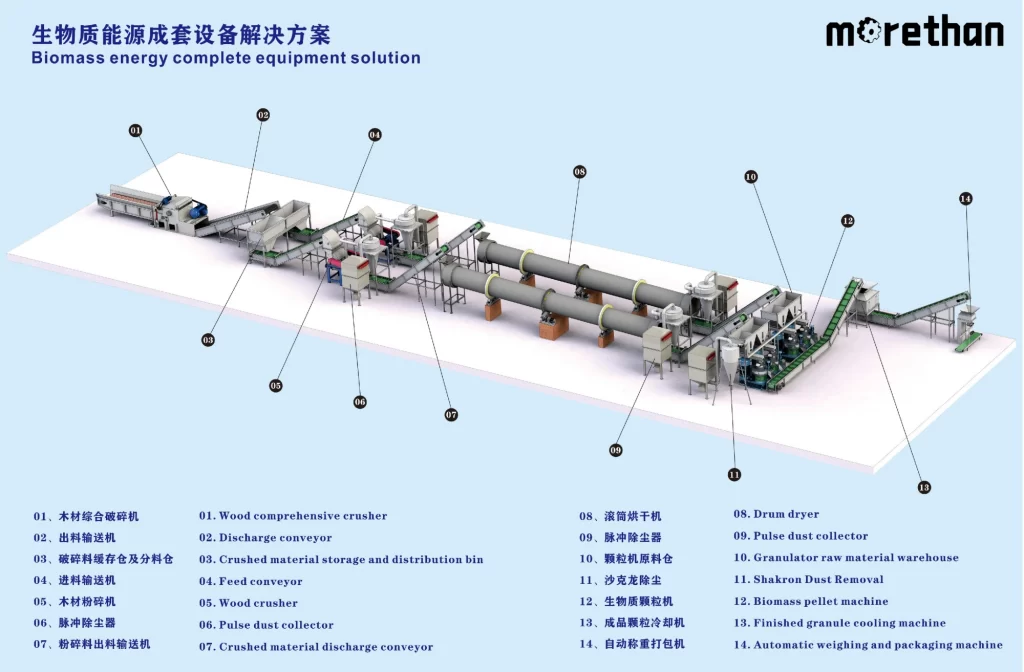
Setting up a complete biomass pellet production line requires reasonable layout and matched equipment configuration. Many new investors focus only on single pellet mill performance, while ignoring the whole‑site layout and supporting machinery selection. Poor layout will lead to material blocking, low running efficiency, extra labor cost and potential safety risks. A well‑planned layout helps you get stable output and reduce long‑term operation expenditure.
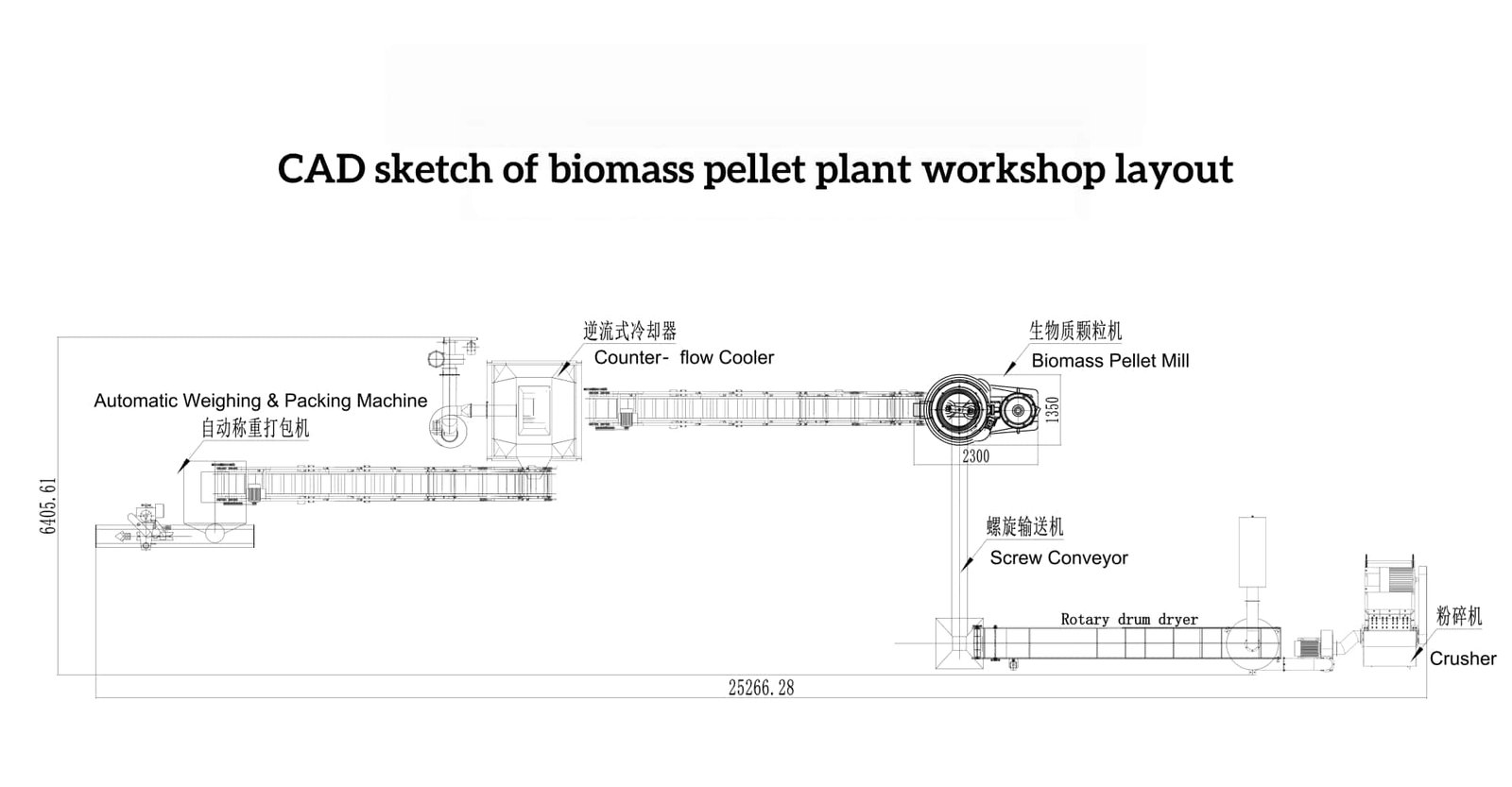
The complete pellet line mainly handles raw materials like wood chips, tree branches, sawdust, straw, agricultural residues and other biomass waste. The whole production flow follows raw material crushing → drying → pelletizing → cooling → screening → finished product storage and packing. Every equipment unit must match in capacity to avoid bottlenecks in the whole production chain.
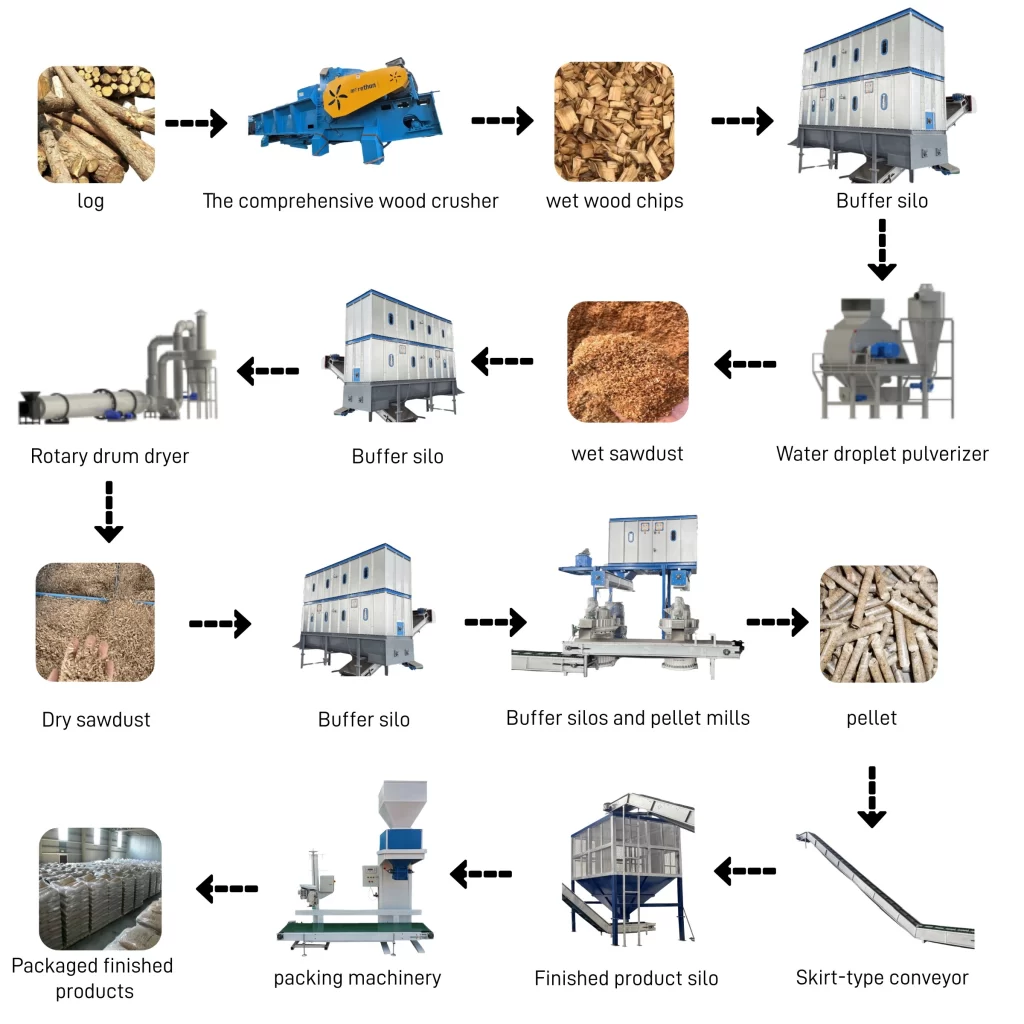
Raw Material Pre‑treatment Section
The first stage covers crushing and grinding. For large‑size raw logs and branches, a primary wood shredder or chipper cuts big blocks into small chips. After chipping, a hammer mill further reduces material size to meet pelletizing requirements. Raw material particle size is critical. Too large fragments will cause frequent jam inside pellet mill chambers.
Space suggestion: Place crushing zone near raw material stock area. This shortens forklift transport distance and saves handling work.
Drying Section
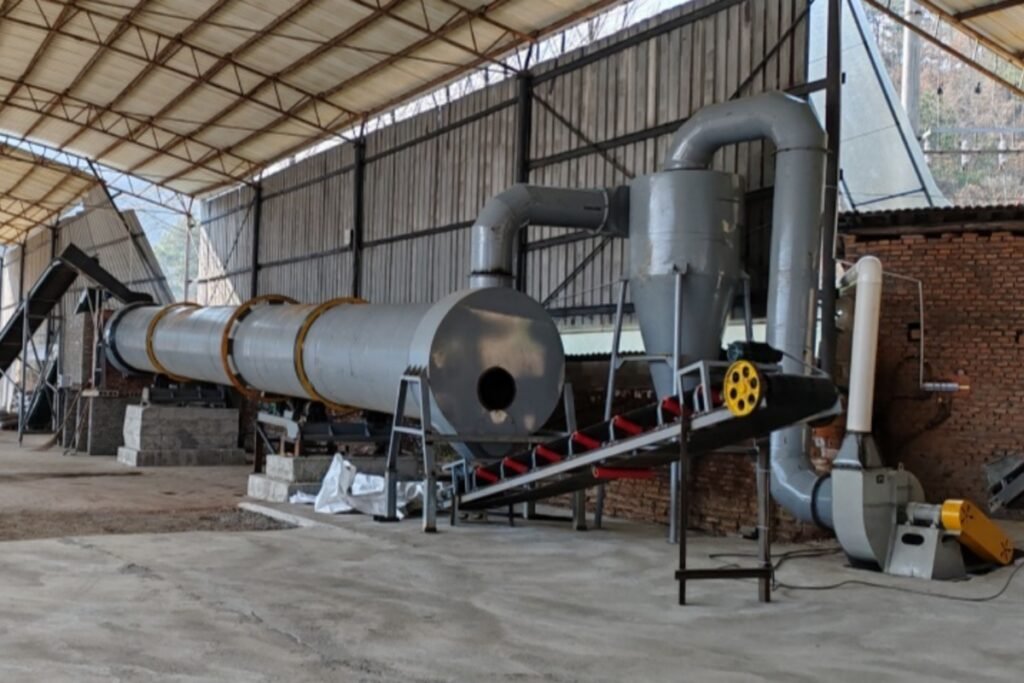
Fresh biomass material usually carries high moisture content between 35‑55%. Pellet production requires raw moisture around 12‑18%. Rotary drum dryer is widely used in commercial complete lines. Hot air removes excess water steadily. Do not skip drying process. High‑moisture feedstock leads to soft, cracked pellets and low finished product rate.
Pelletizing Section
Pellet mill acts as the core unit of the whole factory. Ring die pellet machines are preferred for large‑scale continuous commercial production. Flat die pellet mills fit for small‑scale or mobile projects. All feeding material must reach qualified size and moisture before entering pellet mill. Mismatched pre‑treatment will shorten die and roller service life sharply.
Leave enough maintenance space around pellet mills for die replacement and daily inspection during layout planning.
Post‑processing Section: Cooling, Screening & Packing
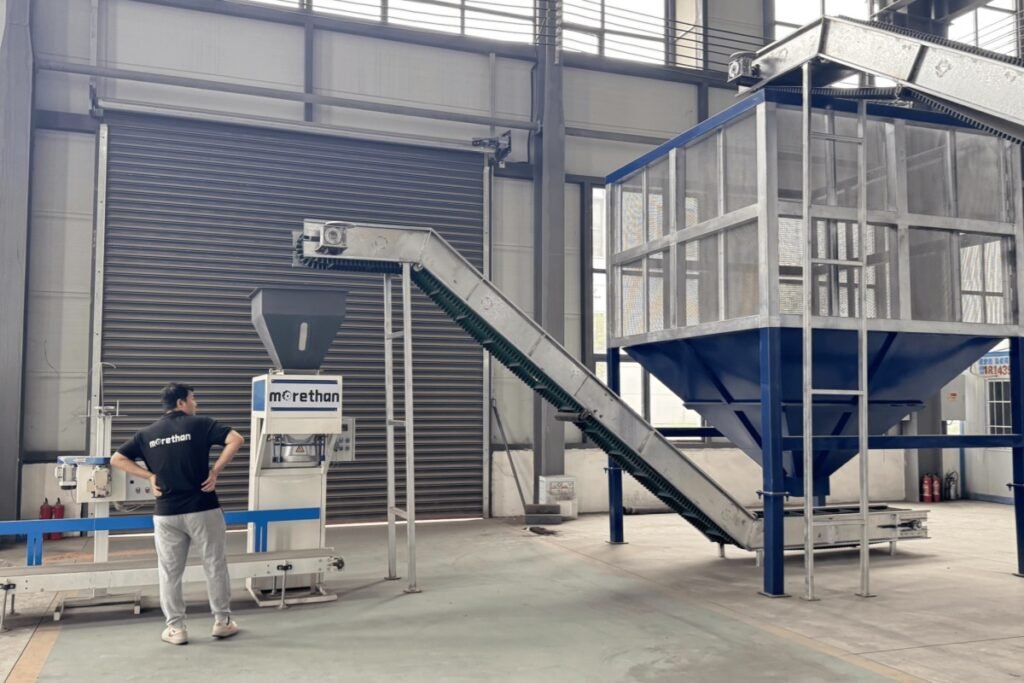
Hot pellets discharged from pellet mill are soft. Counter‑flow cooler reduces pellet temperature and increases hardness. After cooling, vibrating sieve screens out fine powder. Qualified pellets go to automatic packing machine for bagging. Residual powder can be sent back into pelletizing loop for re‑processing.
Key Layout Principles for Workshop
- Arrange equipment following production flow order, keep material moving in one direction, avoid cross‑traffic inside plant.
- Reserve maintenance passage for each machine, especially for dryer and pellet mill.
- Separate raw material warehouse, production area and finished goods warehouse.
- Reserve space for spare parts storage and daily repair work.
Many project failures come from mismatched equipment capacity and unreasonable factory layout. Before purchasing machinery, confirm your raw material type, input moisture, target hourly output and local workshop dimension. We provide customized layout drawing and turn‑key solution for global biomass investors.
If you are planning a new biomass pellet factory, feel free to contact us for technical consultation and tailored equipment configuration proposal.