
1. Introduction
Small-scale biomass pellet plants stand out as a highly cost-effective, sustainable investment solution for rural entrepreneurs, renewable energy resellers, and agricultural waste recycling businesses across the globe. Driven by global carbon neutrality initiatives and the surging demand for eco-friendly alternative fuels, biomass pellets processed from wood sawdust, crop straw, rice husks, and forest residues have become a mainstream replacement for traditional coal in residential space heating, industrial boiler combustion, and distributed power generation.
Unlike capital-intensive large-scale biomass pellet production lines, small biomass pellet manufacturing plants feature low startup costs, compact footprint, user-friendly operation, and flexible hourly output ranging from 1 to 5 tons. This makes them ideal for new investors and regional small-batch biomass fuel production. This detailed, step-by-step tutorial covers plant site selection, complete equipment configuration, standardized production workflows, installation and commissioning, daily operation and maintenance, and profit potential analysis, enabling you to build a fully compliant, high-efficiency small biomass pellet plant from the ground up.
2. Pre-Construction Preparation & Project Planning
Thorough pre-construction planning is the foundation of high production efficiency, consistent product qualification rates, and long-term profitability for any small biomass pellet plant. Hasty equipment purchases and unplanned site layout often result in raw material waste, frequent machine blockages, and low-quality biomass pellets. Comprehensive pre-project preparation focuses on four critical aspects: raw material verification, scientific site selection, production capacity positioning, and local legal & environmental compliance.
2.1 Raw Material Confirmation
Biomass pellet manufacturing imposes strict standards for raw material types, particle size, and moisture content to ensure stable molding and durable pellet quality. The most widely used raw materials include wood sawdust, wood chips, corn straw, wheat straw, rice husks, peanut shells, and tree branch residues. For optimal pellet hardness and maximum molding rate, raw materials must meet two key criteria: particle size controlled between 3–5mm and an ideal moisture content of 10%–15%. Excessive moisture leads to unshaped pellets and frequent equipment jams, while overly dry raw materials produce cracked, fragile finished pellets that fail industrial quality standards.
2.2 Site Selection Standard
A standard small biomass pellet plant with 1–5t/h production capacity requires a total area of 300 to 800 square meters, reasonably divided into a raw material storage zone, production processing zone, finished product storage area, and operational passageways. The ideal plant site requires flat, dry, well-ventilated ground and stable 380V industrial power supply. It is highly recommended to select suburban industrial parks or standardized rural workshops to avoid residential noise complaints and fully meet local environmental inspection requirements.
2.3 Capacity & Equipment Budget Positioning
For beginner investors and startup projects, a 1–3t/h small biomass pellet production line delivers the best cost-performance, featuring low initial investment, simple operation, and low maintenance costs. After achieving stable production and building reliable sales channels, the production line can be upgraded to a 5t/h medium-scale system to expand output. All equipment configurations are customized to match targeted production capacity, eliminating redundant equipment investment and unnecessary capital loss.
2.4 Legal & Environmental Compliance
Prior to plant construction, investors must complete mandatory business registration, environmental protection filing, and safety production documentation. As a green renewable energy project, the small biomass pellet plant enjoys low environmental assessment thresholds and simplified approval procedures, serving as one of its most attractive investment advantages for global small and medium-sized investors.
3. Core Equipment Configuration of Small Pellet Plant
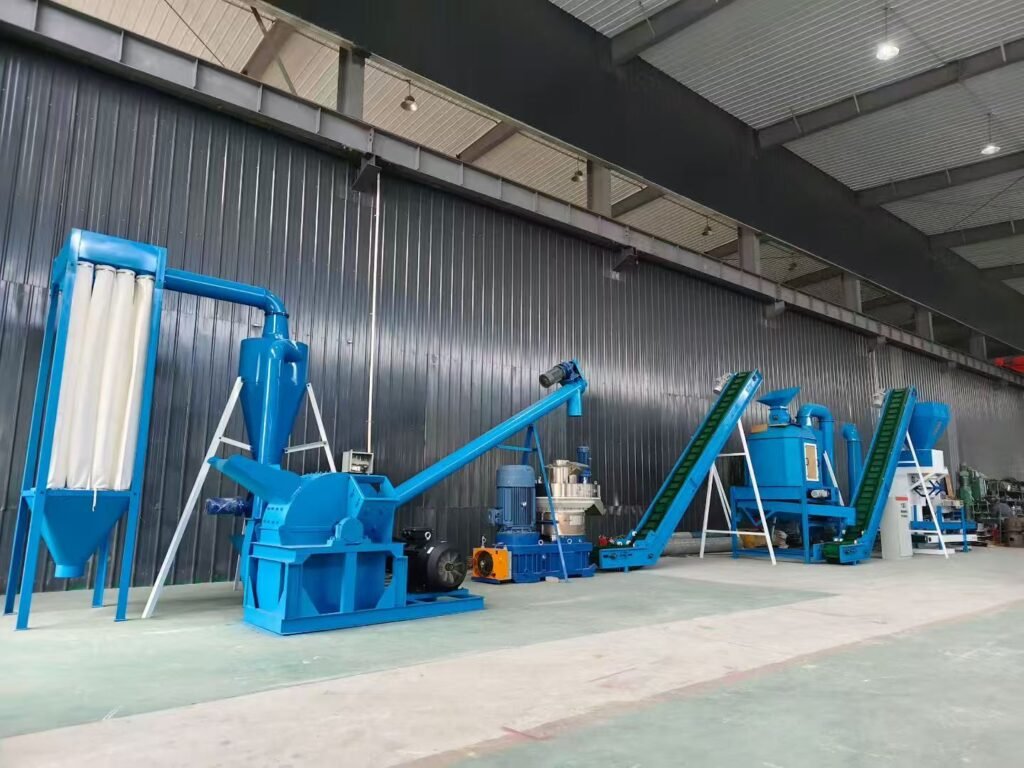
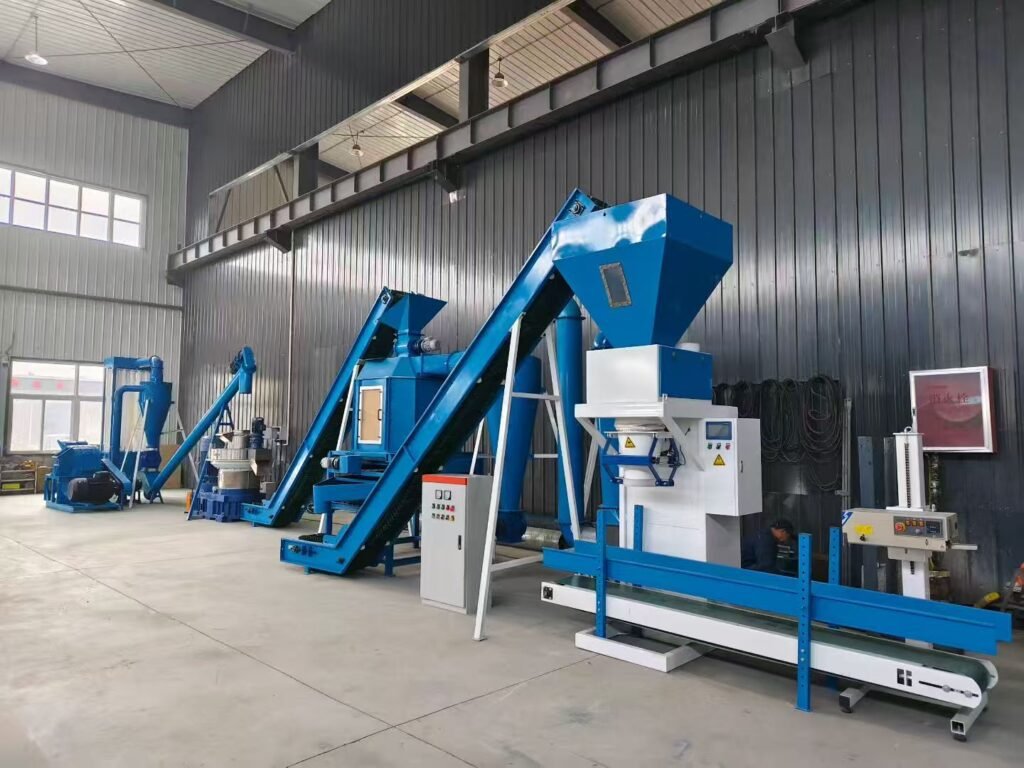
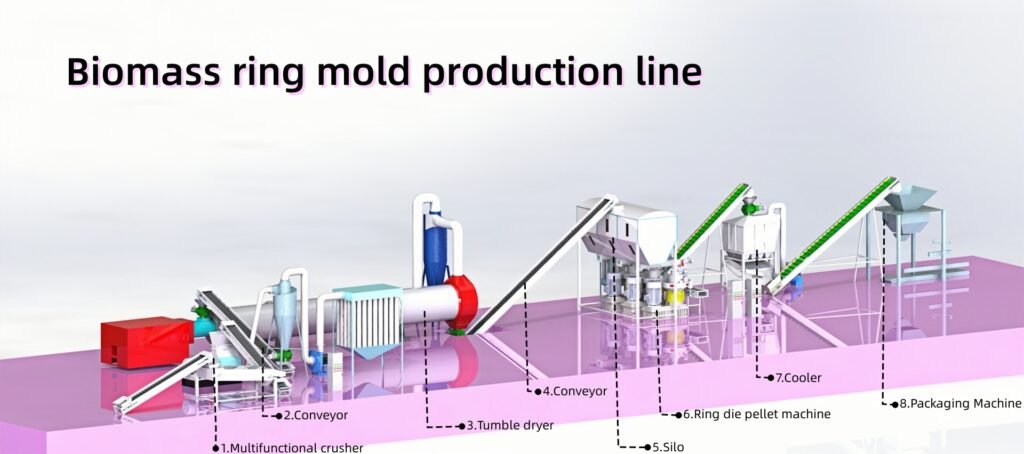
A complete turnkey small biomass pellet production line consists of five interconnected core systems: raw material crushing system, moisture drying system, biomass pelletizing system, cooling and screening system, and automatic packaging system. Every device is precisely matched and closely linked, and reasonable parameter matching directly determines overall production efficiency and finished pellet quality.
3.1 Crushing Equipment
The hammer mill is the essential primary crushing equipment for small biomass pellet plants. It efficiently crushes bulk raw materials such as wood chips, tree branches, and crop straw into uniform fine particles that meet pelletizing molding standards. This pre-processing step solves the problems of oversized raw material volume and difficult compression molding, laying a solid foundation for high-quality pellet production.
3.2 Drying Equipment
Rotary dryers and flash dryers are the two mainstream drying devices supporting small pellet production lines. Raw materials with a moisture content above 20% must undergo professional drying treatment to adjust the moisture level to the optimal molding range of 10%–15%. Precise moisture regulation can boost the biomass pellet molding rate to over 98%, greatly reducing raw material waste.
3.3 Pelletizing Host Equipment
Flat die pellet mills and mini ring die pellet mills are the two dominant pelletizing hosts for small-scale production lines. Flat die pellet machines feature affordable pricing and flexible operation, suitable for processing diverse biomass raw materials. Ring die pellet machines deliver higher hourly output and superior pellet compactness, ideal for long-term, uninterrupted industrial production.
3.4 Cooling & Screening Equipment
Freshly extruded biomass pellets reach a high temperature of 80–100°C with soft, fragile texture, making them prone to breakage during transportation and storage. The counterflow pellet cooler rapidly reduces the temperature of hot pellets to room temperature (25–35°C), solidifying the internal structure and enhancing pellet hardness and durability. The supporting vibrating screen filters out fine powder and broken pellets, and unqualified materials are recycled to the pellet mill for reprocessing, achieving 100% raw material utilization.
3.5 Automatic Packaging Equipment
Semi-automatic packaging machines are widely adopted in small biomass pellet plants. They can automatically weigh, fill, and seal finished biomass pellets into standard 25kg, 50kg small bags or 1-ton jumbo bags. This automated packaging process greatly improves packing efficiency and facilitates standardized warehouse storage and global logistics transportation.
4. Step-by-Step Production Operation Process
A standardized production workflow is critical for stabilizing biomass pellet quality, reducing production errors, and achieving continuous high-output operation. This step-by-step manufacturing process is tailored specifically for small 1–5t/h biomass pellet plants, eliminating redundant procedures and helping beginners master plant operation quickly.
Step 1: Raw Material Pre-Crushing Feed collected biomass raw materials including wood chips, crop straw, and rice husks into the hammer mill, crushing them into uniform 3–5mm fine particles to meet the basic particle size requirements for pellet molding.
Step 2: Material Drying & Moisture Adjustment Convey the crushed biomass particles to the drying equipment. Adjust drying temperature and operating time according to the initial moisture content of raw materials, precisely controlling the final moisture level within the optimal 10%–15% range.
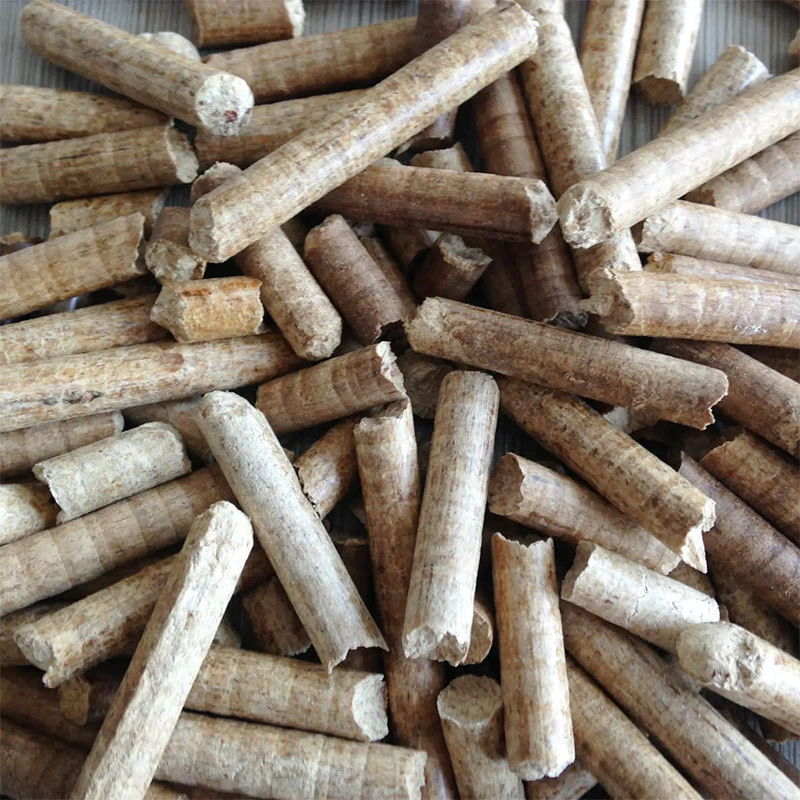
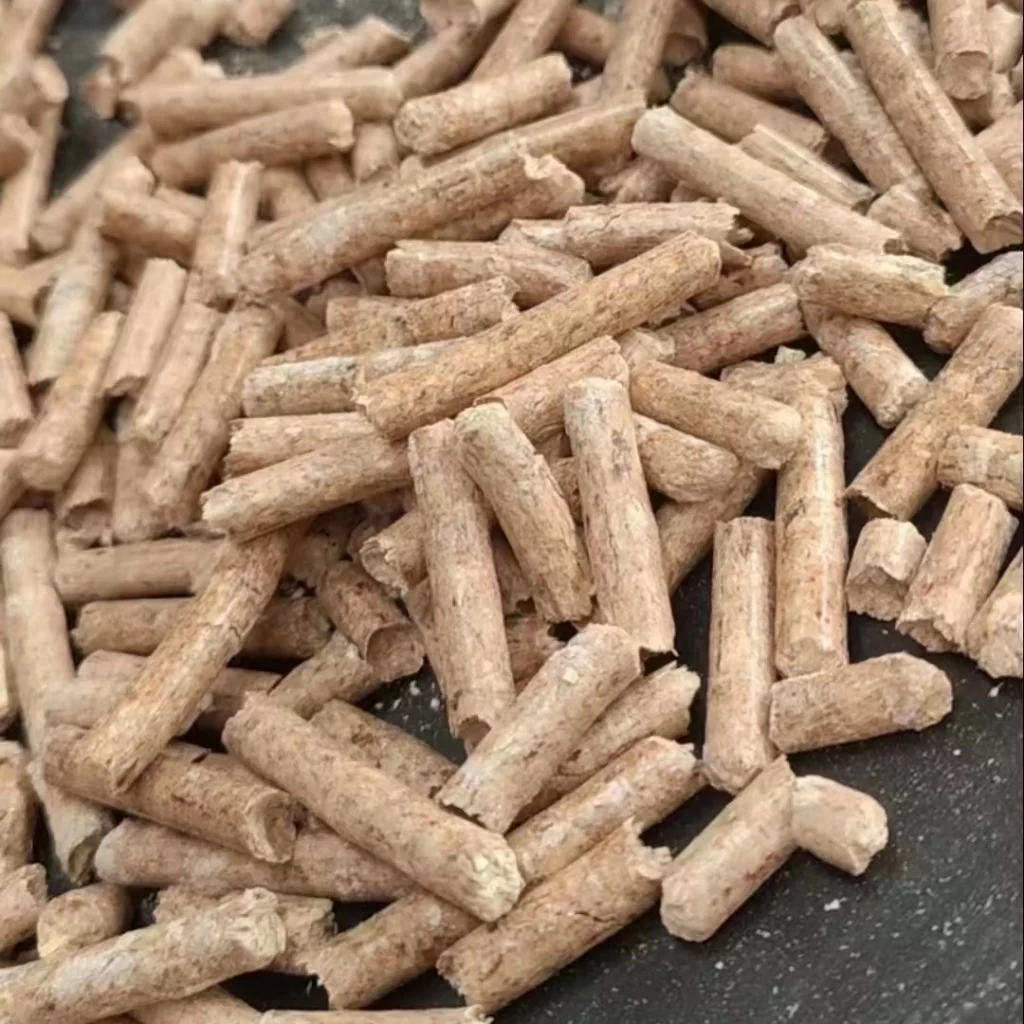
Step 3: Uniform Feeding & Pelletizing Feed fully dried and qualified biomass materials into the pellet mill evenly. Avoid overfeeding to prevent equipment blockage and motor overload. Maintain stable molding cavity pressure to extrude uniform, cylindrical biomass pellets with consistent specifications.
Step 4: Pellet Cooling & Shaping High-temperature hot pellets are transported to the counterflow cooler for rapid cooling. This process solidifies the pellet internal structure, significantly improving hardness, abrasion resistance and structural stability, effectively preventing pellet cracking and breakage.
Step 5: Screening & Recycling The vibrating screen effectively separates fine powder and broken pellets from finished products. Qualified intact biomass pellets are delivered to the packaging process, while unqualified scraps and powder are recycled for secondary pelletizing to eliminate raw material waste.
Step 6: Automatic Packaging & Storage Qualified finished biomass pellets are automatically weighed and packaged. Packaged products are stored in dry, ventilated warehouses to prevent moisture regain, mildew and quality deterioration, ensuring long-term product storage stability.
5. Equipment Installation, Commissioning & Trial Operation
Professional equipment installation and standardized commissioning are essential prerequisites for formal mass production. First, level and fix all production equipment strictly according to the plant layout design, connect power supply systems and material conveying pipelines, and inspect the tightness of all connecting parts and the flexibility of movable operating components.
Before formal material feeding, conduct 5–10 minutes of no-load trial operation to check for stable equipment operation, abnormal noise or mechanical vibration. Then put in a small amount of raw materials for trial production. Adjust feeding speed, drying temperature and pelletizing pressure according to pellet molding effects, optimizing all parameters until pellet hardness, size uniformity and surface gloss meet international industry standards.
After stable trial production performance, continuous batch production can be launched. During the commissioning and trial operation phase, record equipment operating parameters and production data regularly, providing accurate reference for subsequent daily operation and routine maintenance.
6. Daily Operation & Maintenance Tips
Scientific daily operation and systematic maintenance can effectively extend the service life of biomass pellet production equipment, reduce mechanical failure rates, and ensure long-term stable and efficient operation of the entire production line. The core standardized maintenance guidelines are summarized below:
First, thoroughly clean residual biomass materials inside all equipment cavities after daily shutdown to prevent material caking, mildew and blockage, which may affect the next day’s production. Second, regularly lubricate motors, bearings and transmission components to reduce mechanical friction and wear. Third, inspect wearing parts including pellet dies and screen meshes periodically, replacing worn components in a timely manner to guarantee high pellet qualification rates. Fourth, strictly control raw material moisture content and feeding speed during operation to avoid equipment blockage and overload operation.
In addition, arrange dedicated operators to manage production equipment, implement standardized operating procedures strictly, and avoid mechanical damage caused by improper manual operation.
7. Project Profit Analysis & Development Prospects
Building a small biomass pellet plant has become one of the most lucrative green energy business ideas for global investors, thanks to low startup costs, fast ROI (return on investment), and massive global demand for sustainable biomass fuel. Local agricultural waste, forest residues, and wood scraps are affordable and easily accessible raw materials, which drastically cut down overall production expenses. Finished biomass pellets are widely used in residential heating, industrial boiler fuel replacement, and biomass power generation, creating a stable and profitable sales market worldwide.
With increasingly stringent global carbon emission regulations and the continuous rise of fossil energy prices, eco-friendly biomass energy has ushered in broader market development space. For small and medium investors, building a small biomass pellet plant is a low-risk, high-profit green energy project with sustainable development value and long-term market potential.
8. Conclusion
How to build a high-efficiency small biomass pellet plant does not require large capital or professional industrial experience. It is a standardized systematic project covering scientific site selection, matched biomass pellet equipment configuration, standardized production workflows, and routine maintenance. Strictly following industrial standards and controlling raw material moisture and molding parameters allows investors to build a fully functional, low-failure pellet production line with ease.
Driven by global carbon neutrality policies and the rising demand for renewable energy, small-scale biomass pellet manufacturing remains a high-competitiveness, sustainable business. It not only realizes local agricultural waste recycling but also supplies eco-friendly biomass pellets to the global clean energy market, bringing long-term stable economic returns for small business owners and renewable energy entrepreneurs.
If you are planning to set up a small biomass pellet plant and need professional equipment selection, customized plant layout, turnkey production solutions, or one-stop installation and commissioning services, feel free to contact our professional team. We provide tailored biomass pellet plant solutions according to your raw material types, target output, and budget, helping you build a high-efficiency, cost-saving, and high-profit pellet production line.