
Vertical vs Horizontal Ring Die Pellet Mill: Full Comparison
Ring‑die pellet mills are core processing equipment for biomass and animal feed production. Vertical ring‑die and horizontal ring‑die are two mainstream structural designs widely used globally. Many international buyers get confused during selection, assuming vertical ring‑die units are only for small‑scale output. In fact, well‑built heavy‑duty vertical ring‑die pellet mills can reach up to 5 t/h capacity. This article compares their mechanical structure, working principle, pros & cons and real‑world application scenarios, helping buyers pick the right unit for their project.
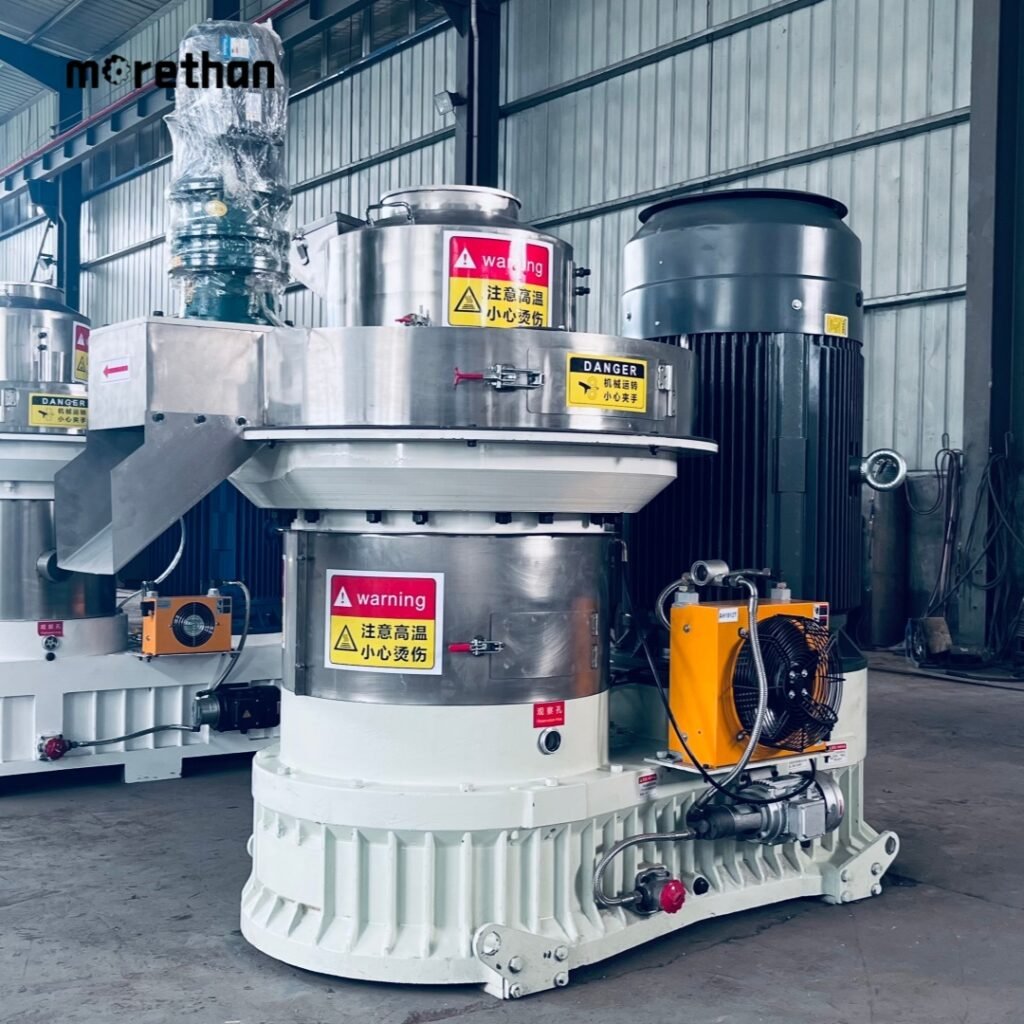
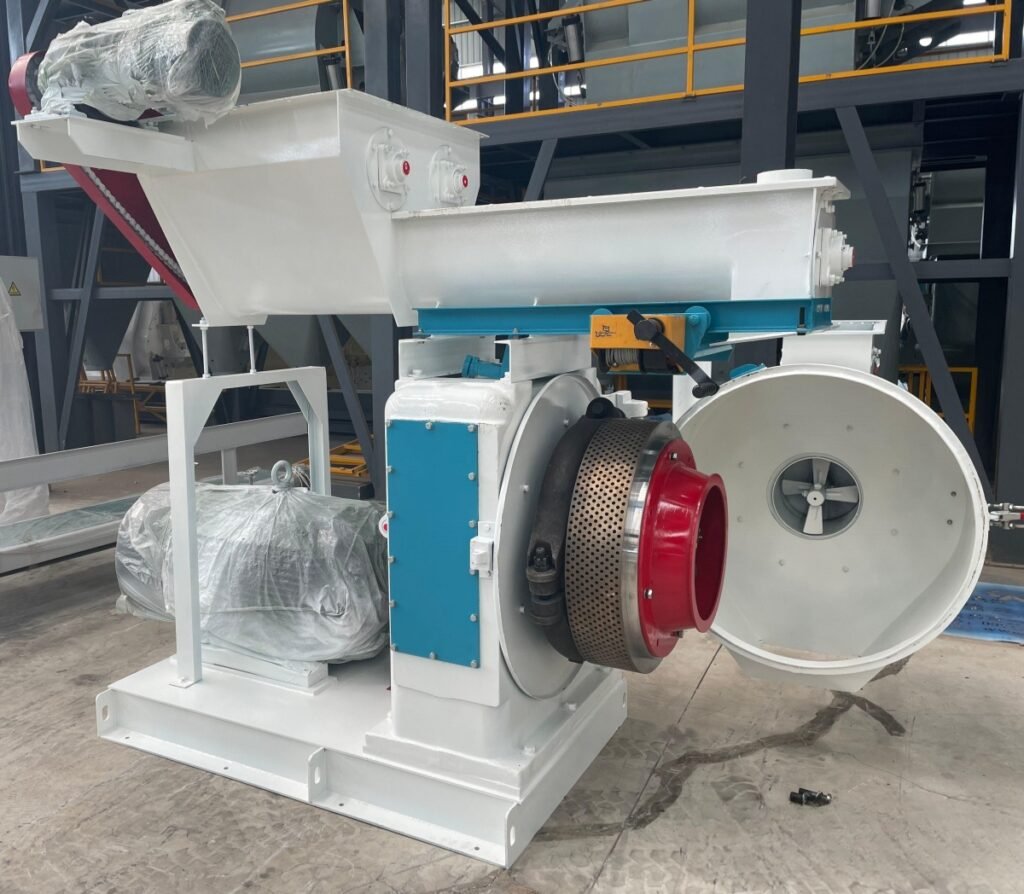
Basic Structure & Working Principle Difference
Vertical Ring Die Pellet Mill
The ring die is fixed in vertical position, rollers rotate while the die stays static. Main motor is arranged at bottom. Raw materials fall by gravity into pressing chamber, centrifugal force from spinning rollers spreads materials evenly around die inner wall. Materials are extruded through die holes, finished pellets discharge downward. Heavy‑duty industrial vertical models support output up to 4‑5 t/h with reinforced gearbox and large‑size ring die. It adopts double‑layer usable die design for lower spare‑part cost.
Horizontal Ring Die Pellet Mill
The ring die is horizontally mounted and rotates during operation, rollers remain stationary. Driving motor is installed on machine side. Raw materials are fed sideways into pelletizing cavity, usually requiring forced feeding. Pellets are discharged from side outlet. This structure originated from feed‑making industry, widely adopted in traditional feed pellet plants.
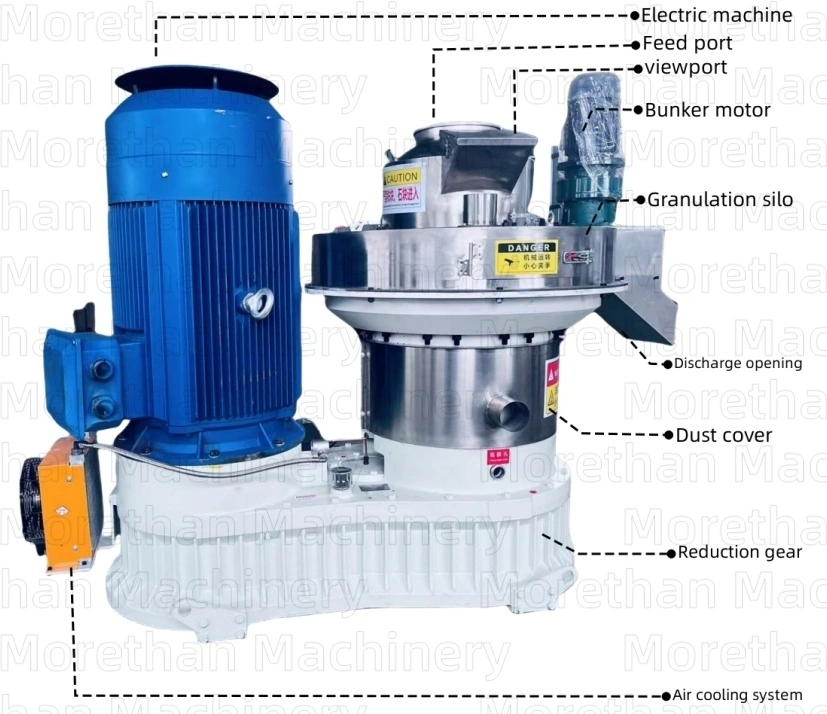
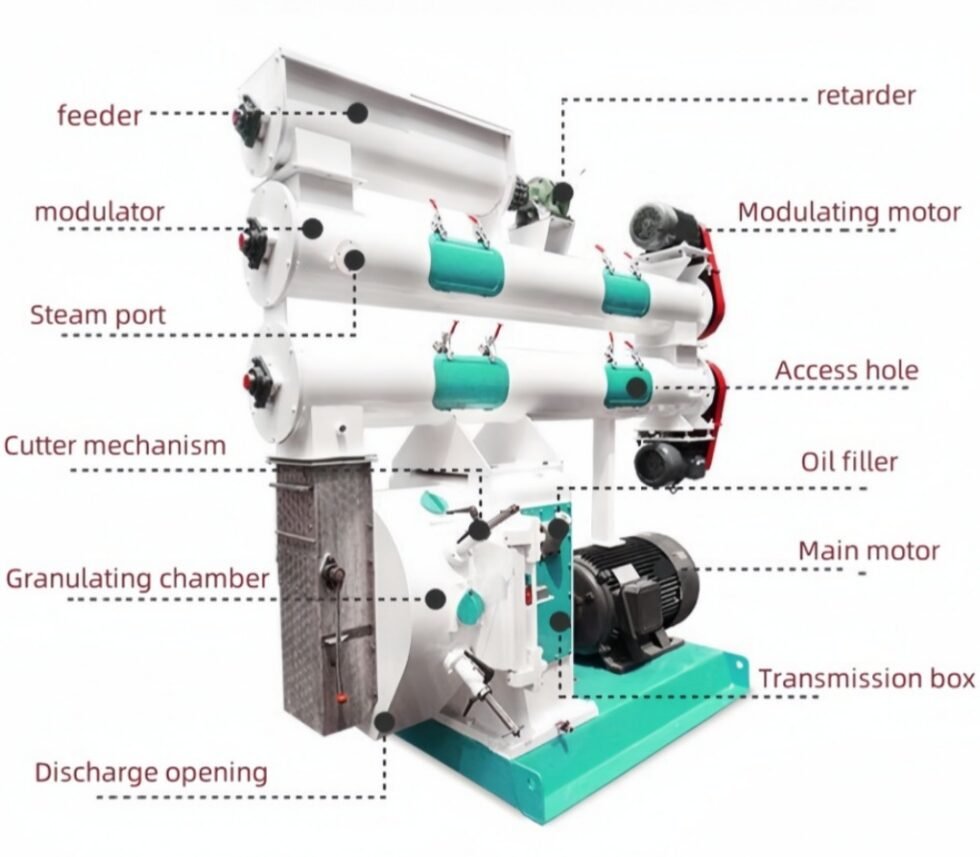
Core Advantages & Weak Points
Vertical Ring Die Pellet Mill
Pros
- Gravity feeding avoids material bridging and blockage, performs excellently for light fluffy raw materials like sawdust, wood shavings, straw.
- Open‑style pressing chamber brings better natural heat dissipation, reduces overheating risk for long‑time continuous running, extends wear‑parts service life.
- Heavy‑duty industrial versions can achieve 4‑5 t/h output, fit for medium‑large biomass pellet factories. Double‑layer ring die cuts replacement cost.
Cons
- Requires sufficient vertical height for feeding, often needs matching lifting conveyor for large‑size models.
- Higher initial investment for heavy‑duty 4‑5t/h industrial configurations.
- Vertical installation height must be considered during workshop layout planning.
Horizontal Ring Die Pellet Mill
Pros
- Side opening structure makes ring‑die and roller replacement convenient. Fits well into existing horizontal feed production lines.
- Mature technology for animal feed pellet processing, stable performance for grain‑based feed raw materials.
Cons
- Side feeding easily causes bridging for light low‑density biomass materials, normally needs screw forced feeder.
- Sealed cavity accumulates heat heavily under long‑time heavy‑load operation, puts higher pressure on bearing service life.
- Cantilever‑mounted ring‑die structure has mechanical limits when upgrading to ultra‑large biomass‑specialized models.
How To Choose Between Two Designs
- Choose Vertical Ring Die Pellet Mill: Process sawdust, hardwood, straw and other fibrous biomass; output range 1‑5 t/h; pursue stable 24‑hour continuous running; hope to lower long‑term wearing‑part expense. Pay attention to workshop vertical space when selecting heavy‑duty large models.
- Choose Horizontal Ring Die Pellet Mill: Mainly produce animal feed pellets; existing production line adopts horizontal layout; prioritize easy quick die replacement, less concern about biomass fluffy‑material blockage risk.
Key Buying Reminders
Capacity data heavily depends on raw material type, moisture content and motor configuration. Same‑type pellet mills from different manufacturers show big gaps on heavy‑duty version workmanship. Do not judge capacity only by machine structure. Tell your supplier your raw material condition, target hourly output and site dimension, to get targeted machine recommendation.
Feel free to send inquiries if you have further questions about pellet mill selection.